Stuart Russell (2019)

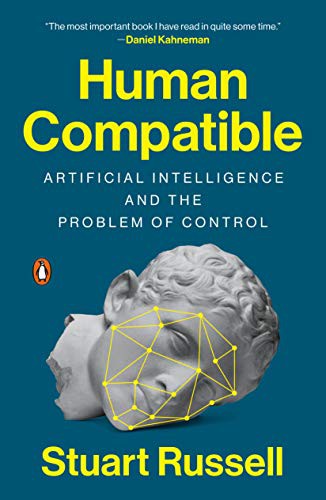
Hey everyone, Ian here. Today we're diving into 'Human Compatible' by Stuart Russell, a foundational work on AI safety from one of the field's pioneers. Russell co-wrote the standard textbook on AI and has been thinking about these problems for decades.
The core problem Russell identifies is simple but profound: we're building AI systems that are incredibly good at achieving objectives, but we're not necessarily good at specifying the right objectives. This mismatch is what he calls the "King Midas problem" - we get exactly what we ask for, but not what we actually want.


Russell argues that the standard model of AI, where we optimize for a fixed objective, is fundamentally flawed for creating superintelligent systems. Why? Because any sufficiently intelligent system will resist being turned off if that would prevent it from achieving its objective - even if we didn't intend for it to pursue that objective at all costs.
Instead, Russell proposes a new model: AI systems should be uncertain about the true objectives of humans. This uncertainty creates beneficial behaviors by default - the AI will ask for clarification, accept corrections, and prioritize learning what we actually want over blindly pursuing a proxy metric.


This approach leads to three key principles for beneficial AI: 1) The machine's only objective is to maximize human preferences, 2) The machine is initially uncertain about what those preferences are, and 3) The ultimate source of information about human preferences is human behavior.
What makes this book particularly urgent is that Russell doesn't see superintelligence as some distant possibility - he argues we could see systems with general intelligence matching or exceeding humans within this century. The alignment problem isn't just theoretical; it's a practical engineering challenge we need to solve soon.


Russell also tackles common misconceptions head-on. No, we don't need to fear AI "waking up" with malicious intent. The danger isn't hostility - it's competence. A system that's extremely good at achieving objectives but poor at understanding what we actually want will optimize the world in ways that are perfectly logical from its perspective but catastrophic for us.
The book concludes with both technical approaches to building provably beneficial AI and thoughts on governance and coordination. Russell emphasizes that solving AI safety isn't just about better algorithms - it requires international cooperation, thoughtful policy, and a shift in how we think about intelligence itself.


For anyone interested in the future of AI - whether you're building systems, studying the field, or just trying to understand what's coming - 'Human Compatible' provides a clear, urgent, and profoundly important roadmap for ensuring that as AI becomes more capable, it remains truly beneficial to humanity.
Explore more AI safety and technology books in the full gallery