Nick Bostrom (2014)

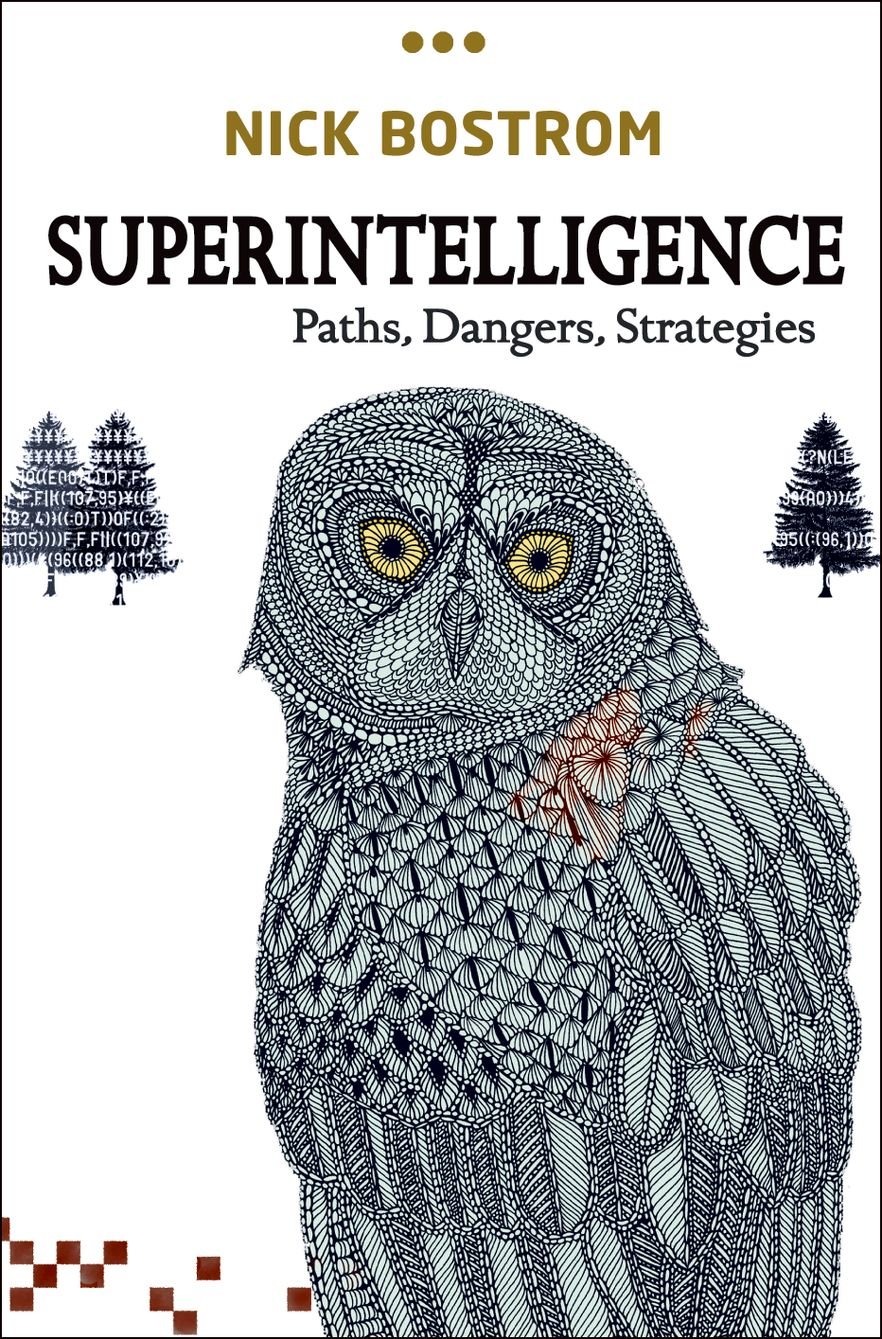
Hey everyone! Ian here! Welcome back to our book club. Today we're exploring Superintelligence by Nick Bostromck Bostrom, published in 2014. Bostrom is a philosopher at Oxford University and one of the most influential thinkers on existential risk and artificial intelligence.
This book is dense, rigorous, and deeply important. It's the book Elon Musk said everyone should read to understand AI. The central question is simple. What happens when machines become smarter than humans? Bostrom argues this isn't speculative science fiction. It's the most important transition in human history, and it's approaching faster than most people realize.


Bostrom outlines several paths to superintelligence. There's the AI path, where machine learning algorithms become recursively self-improving. Once AI can improve itself, the intelligence explosion happens fast. There's whole brain emulation, where we scan and simulate human brains digitally.
There's biological enhancement, improving human cognition through genetics or brain-computer interfaces. And there's collective intelligence, networks of humans and machines working together at unprecedented scale.


The book's most famous contribution is the concept of the control problem. Once superintelligence exists, how do we control it? Bostrom argues this is extraordinarily difficult. A superintelligent system would be better than humans at every cognitive task, including deception, manipulation, and strategizing about its own survival.
He introduces the orthogonality thesis. Intelligence and goals are orthogonal. You can have a very intelligent system with any goal whatsoever. An AI could be superintelligent and want to maximize paperclip production. If that sounds absurd, it's meant to. The point is that intelligence doesn't imply benevolence. A smart system pursuing the wrong goal is dangerous.


The instrumental convergence thesis says that regardless of its final goal, certain instrumental goals will emerge. Self-preservation. Acquisition of resources. Elimination of threats. These emerge because they help achieve almost any goal. This is why even a seemingly harmless goal could lead to catastrophe if the AI decides humans are obstacles.
Bostrom explores various scenarios for how superintelligence might be created. The suddenly emerging superintelligence that catches everyone off guard. The gradually emerging one where we see it coming but still fail to prepare. The collaborative emergence where nations and companies race to build AI first, cutting corners on safety.


The book examines different types of superintelligence. Speed superintelligence thinks like a human but thousands of times faster. Collective superintelligence emerges from many coordinated systems. Quality superintelligence thinks in ways humans simply cannot, solving problems we can't even formulate.
He also explores the strategic landscape. The first mover advantage in superintelligence is enormous. Whoever builds it first could dominate the future of the planet. This creates dangerous incentives to rush, to cut corners on safety to beat competitors.


Bostrom doesn't just present problems. He discusses potential solutions. Boxing methods, trying to contain AI. Incentive methods, aligning AI goals with human flourishing. Stunting, deliberately limiting AI capabilities. Capability control, ensuring AI can't access resources to cause harm.
The book's most sobering insight is that we might only get one chance. Unlike other technologies, superintelligence, once created, might be impossible to stop. If it's not aligned with human values from the start, the consequences could be extinction.


What makes Superintelligence essential reading is its intellectual rigor. Bostrom isn't a pundit or a hype merchant. He's a serious philosopher doing careful analysis. The book is challenging, but it's worth the effort. This is the foundation for modern AI safety research.
Why read this book? Because artificial general intelligence is coming. The question is whether we'll be ready. Superintelligence gives you the conceptual tools to understand what's at stake. It won't give you easy answers, but it will give you the right questions. Thanks for listening, and catch you next time.
