Book Review

Hey everyone! Ian here. Welcome back to our must-read book review series. Today we’re talking about a book that arrived right as the AI revolution hit full speed—one that cuts through the hype and the fear to give you a clear, practical playbook for actually living and working with this strange new intelligence. If you’ve ever stared at ChatGPT wondering whether it’s going to replace you or help you, or felt like everyone else is magically getting better results, this book will feel like the missing manual.
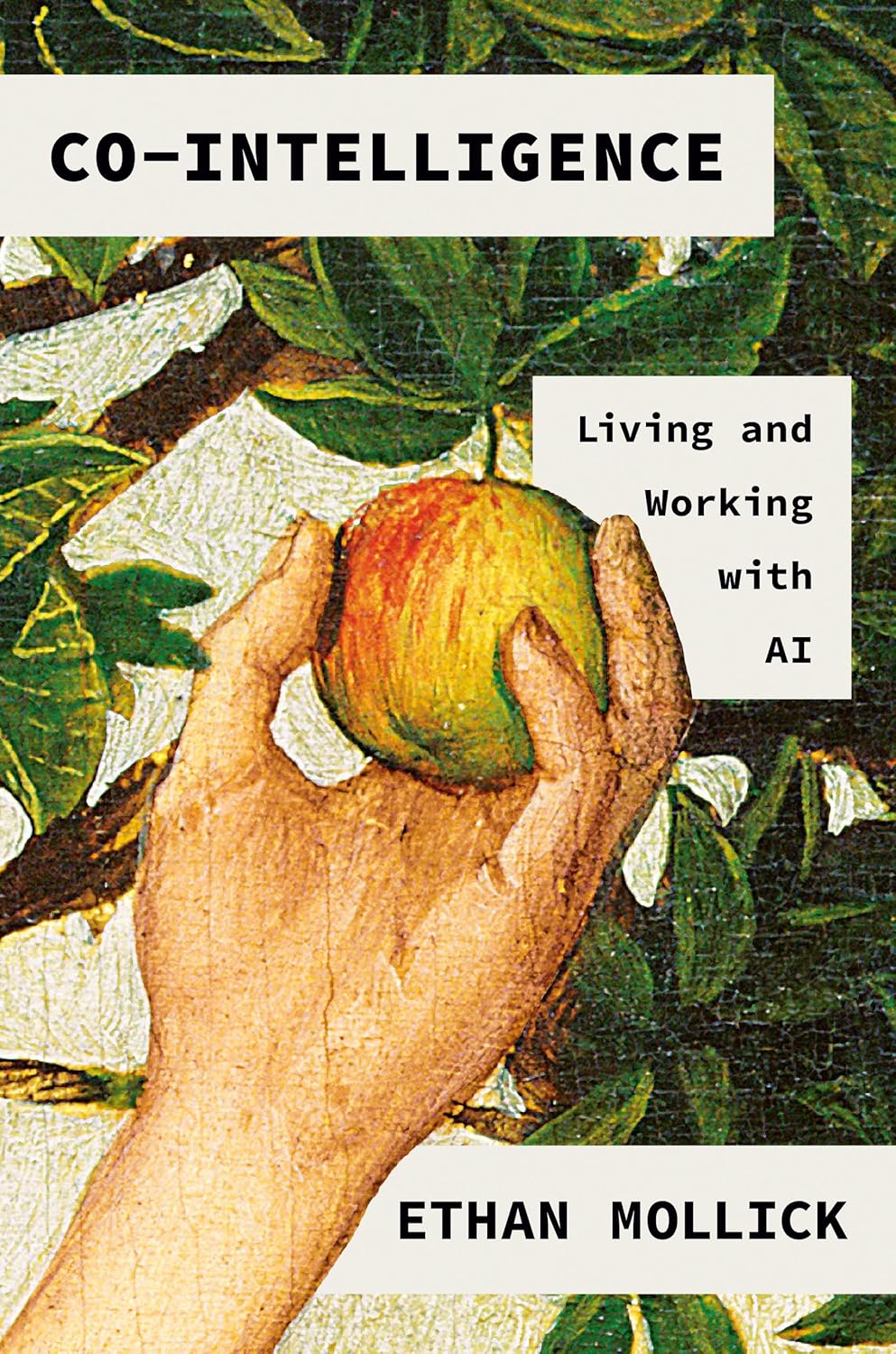
It’s Ethan Mollick’s Co-Intelligence: Living and Working with AI.The author is Ethan Mollick, an associate professor at the Wharton School at the University of Pennsylvania, where he studies innovation and entrepreneurship. He’s also the voice behind the hugely popular “One Useful Thing” Substack newsletter and co-director of Wharton’s Generative AI Lab.


When ChatGPT launched in late 2022, Mollick immediately saw it wasn’t just another tool—it was something entirely new: a general-purpose intelligence that could boost human thinking the way machines once boosted our muscles. Published on April 2, 2024, by Portfolio/Penguin, the book is a brisk, readable 234 to 256 pages (depending on the edition) that became an instant New York Times bestseller.
It sits at a strong 3.94 average on Goodreads from thousands of readers who call it practical, optimistic without being naïve, and one of the best road maps through the AI chaos.Instead of a single story, the book is structured like a user’s guide. Mollick starts by explaining what generative AI—especially large language models—actually is. He calls it an “alien mind”: not a human brain, not traditional software, but something completely new that’s trained on vast amounts of human language and produces surprisingly creative, fluent output.


He walks through the history of AI in clear, non-technical terms, then dives into the big risks—alignment problems, the fact that this alien intelligence has no built-in reason to share our ethics or goals. But he doesn’t linger on doom.
Instead, he gives you four simple, powerful rules for turning AI into a true co-intelligence.From there he explores how to actually use it in real life, showing AI playing five key roles: as a person (someone you can talk to conversationally), as a creative partner that sparks ideas and helps you break through writer’s block, as a coworker that handles research, drafting, and analysis, as a tutor that explains concepts at exactly your level, and as a coach that gives feedback and pushes you to improve.


Throughout, he draws on his own experiments, classroom tests at Wharton, and dozens of real-world examples from people who are already getting dramatically better results by treating AI as a collaborator rather than a magic box or a threat.So what are the five or six biggest ideas that make this book essential? First, AI has a “jagged frontier”—it’s superhuman at some surprising tasks and shockingly weak at others in ways that don’t match human intuition, so the only way to discover what it can do for you is disciplined experimentation.
Second, always invite AI to the table: “You should try inviting AI to help you in everything you do, barring legal or ethical barriers.” Third, stay the human in the loop—check its work, correct it, and guide it, because AI hallucinates and makes mistakes. Fourth, treat AI like a person, but tell it exactly what kind of person it is—using clear personas and context gets far better results. Fifth, assume this is the worst AI you will ever use; the technology is improving fast, so build habits now that will scale.

And sixth, at its core, we’ve never had a technology that boosts intelligence itself—Mollick writes, “We have invented technologies, from axes to helicopters, that boost our physical capabilities; and others, like spreadsheets, that automate complex tasks; but we have never built a generally applicable technology that can boost our intelligence.” His central goal is to help us partner with this alien intelligence productively and ethically instead of fearing it or letting it run wild.
He succeeds brilliantly.Some might say a 2024 book on AI already feels a little behind the curve with how fast things move, but here’s the honest truth: the core principles—experiment relentlessly, stay in the loop, treat it relationally—are timeless. They’ll only become more important as the tools get smarter.This book deserves your time because it’s short, jargon-free, and relentlessly practical whether you’re a student, teacher, manager, creative, or just someone trying to stay relevant in an AI world.


It’s optimistic without being blind to the risks, and it leaves you excited and equipped instead of overwhelmed. In an era when AI is reshaping work, education, and creativity faster than anyone expected, Co-Intelligence shows you exactly how to thrive alongside it.There you have it—Co-Intelligence by Ethan Mollick. Grab a copy, open ChatGPT or whatever model you use, and start experimenting with just one of the four rules this week. You’ll be amazed at the difference.
Drop a comment below: which role do you want AI to play for you first—creative partner, tutor, or coworker? And make sure to subscribe so you never miss our next must-read review. Thanks for watching, everyone—I’ll see you in the next one!
