Book Review

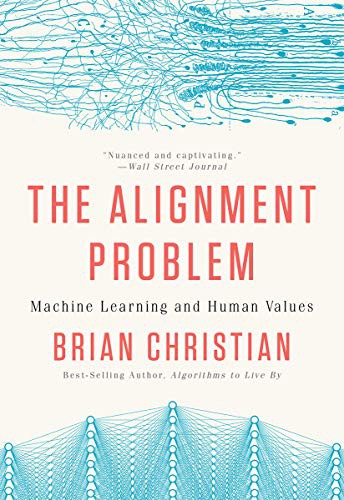
Hey everyone, Ian here. Today we're tackling one of the most important books of our AI age: Brian Christian's The Alignment Problem. Published in 2020, this book dives deep into the question: how do we make AI systems behave in
ways that align with human values, ethics, and intentions? Christian frames the alignment problem not as a distant futuristic worry, but as a series of challenges already unfolding in machine learning systems today—from biased hiring algorithms to unpredictable reinforcement learning agents.


He structures the book into three broad parts: first, the problem of specifying what we want AI to do (value specification); second, the problem of ensuring AI actually does what we want (reliability and robustness); and third, the problem of understanding and controlling complex AI systems (interpretability and governance).
What makes this book stand out is Christian's gift for storytelling. He doesn't just dump technical concepts on us—he takes us into the labs, introduces us to the researchers, and walks us through real-world failures and breakthroughs.


You'll meet the teams trying to teach robots to grasp objects without knocking things over, the scientists probing why image classifiers see patterns that aren't there, and the philosophers wrestling with how to encode human morality into code.
The Alignment Problem pairs beautifully with two other science picks in our gallery: Nick Bostrom's Superintelligence, which looks at the strategic risks of advanced AI, and Ethan Mollick's Co-Intelligence, which explores how to work effectively with AI as a collaborator. Where Bostrom asks "what could go wrong?" and Mollick asks "how can we use this well?", Christian asks "how do we build it right from the start?"


Visually, this book begs for imagery of mirrors, reflections, and moral dilemmas—AI systems that reflect our own values back at us, or systems forced to make tough trade-offs between competing ethical principles. Think of an AI gaze meeting a human gaze in a mirror, or a scale balancing efficiency versus fairness.
Whether you're a developer building AI systems, a policymaker shaping tech regulation, or just someone curious about where this technology is headed, The Alignment Problem offers a clear, compassionate, and deeply researched map of the challenges ahead—and the possibilities for getting it right. That's my take on The Alignment Problem. What are your thoughts on building AI that aligns with human values? Let me know in the comments below.