Book Review

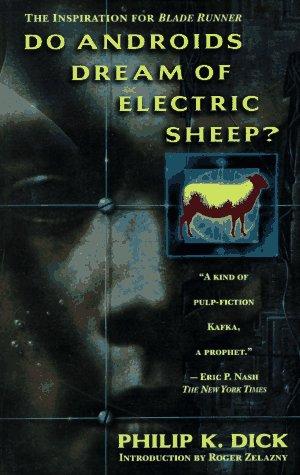
Hey everyone! Ian here! Welcome to our book review. Today we're diving into one of the most haunting, philosophically dense science fiction novels ever written — Do Androids Dream of Electric Sheep? by Philip K. Dick, published in 1968. You probably know the film it inspired — Blade Runner — but trust me, the book is a different beast entirely, and in many ways it's even more unsettling.
Philip K. Dick was a paranoid, prolific, brilliantly unstable American writer who churned out over forty novels and a hundred short stories before dying at fifty-three. He lived on the edge of poverty for most of his career, fueled by amphetamines, mystical visions, and an obsessive curiosity about what is real and what makes a person human. Those two questions — reality and humanity — are the bedrock of nearly everything he wrote. And in this novel, he weaponizes both.


The story is set in a post-apocalyptic San Francisco, after a devastating nuclear conflict called World War Terminus has poisoned Earth's atmosphere with radioactive dust. Most healthy humans have emigrated to off-world colonies — Mars, primarily — leaving behind a planet of sickly stragglers, near-empty cities, and the sad, mutated humans called "specials" who didn't pass the genetic tests for emigration. To encourage emigration, the government gives every colonist a personal android servant. But these aren't simple robots.
They're nearly indistinguishable from humans, and some of them really, really don't want to be slaves.


We follow Rick Deckard, a bounty hunter for the San Francisco Police Department, whose job is to track down and "retire" — that's the euphemism — escaped androids who've murdered their owners and fled to Earth. The new Nexus-6 androids are the most advanced ever built. They can pass for human in nearly every way except for one — they fail an empathy test called the Voight-Kampff. The premise is that real humans, products of evolution, have an involuntary empathic response to suffering that the androids, products of engineering, cannot replicate.
Spoiler warning — I'm going to discuss the full plot. Deckard is given six fugitive androids to retire in a single day, with a bounty large enough to finally let him afford something he and his wife Iran desperately want — a real, living animal. Because in this irradiated world, real animals are nearly extinct, and owning one is the ultimate status symbol and the ultimate spiritual obligation. Deckard, like most people, owns only an electric sheep — a robot replica he keeps on his apartment roof to fool the neighbors.


The shame of having a fake animal is one of the most peculiar and brilliant emotional engines in the book. The central religion of this world is called Mercerism, where adherents grip the handles of an "empathy box" and merge their consciousness with Wilbur Mercer, an old man eternally climbing a hill while invisible adversaries throw stones at him. Mercerism teaches that empathy — the ability to feel another's suffering — is what makes us human, and what binds humanity together against the cold, dead universe.
As Deckard hunts the androids, he meets Rachael Rosen, an android from the corporation that manufactures them. Rachael seduces him in a deliberate attempt to make him incapable of retiring female androids — and it nearly works. Deckard begins to question everything. He feels empathy for the androids he's killing. He sleeps with one. He starts to wonder if he himself might be an android with implanted memories.


Meanwhile, in a parallel storyline, a "special" named John Isidore — a man with diminished intelligence due to radiation exposure — befriends three of the fugitive androids and slowly realizes they are incapable of the simple kindness he extends to them. They torture a spider in front of him for fun, simply curious to see how few legs it can have and still walk.
Deckard ultimately retires all six androids in a single grueling day. But the act hollows him out. He flies into the radioactive wastelands of Oregon, has a religious vision of Mercer himself, and finds a real toad — only to discover, when he brings it home, that it too is electric. The book ends not with triumph but with an exhausted, ambiguous tenderness. Deckard sleeps. His wife orders artificial flies for the electric toad. Life, real or fake, continues. Now let's talk about the big ideas, because this book is dense with them.


First — what is the difference between authentic and artificial? Dick is not really asking whether androids can think. He's asking whether the distinction even matters when our own emotions, religions, and pets can all be manufactured. The electric sheep, the empathy box, the mood organ Iran uses to dial up depression on demand — every emotional experience in the novel is mediated, simulated, sold. And yet the human characters cling to the idea that their feelings are real and the androids' are not.
Second — empathy as the dividing line. The Voight-Kampff test measures empathic response to animal suffering. But Deckard, a professional killer, increasingly fails his own moral version of the test. Meanwhile the androids, designed without empathy, demonstrate love, fear, and self-preservation that look identical to ours from the outside. Dick is asking — if empathy is the criterion, who's actually passing?


Third — Mercerism as collective consciousness. The empathy box may be a religious con. It's exposed as a fraud halfway through the book — Mercer is just an old actor on a soundstage. And yet the experience of merging with Mercer remains real to those who feel it. Dick's point is devastating — meaning doesn't require metaphysical truth. Even a fake religion can produce real grace.
Fourth — the obsession with real animals. In a dying world, owning a real living creature becomes the highest moral act, because caring for a living thing is the proof that you still have a soul. The electric animals are pity machines, hiding the spiritual poverty of their owners. It's one of the strangest, saddest, and most original ideas in all of science fiction.


Fifth — entropy and kipple. Isidore lives surrounded by "kipple" — Dick's wonderful word for the useless garbage that piles up in any home, breeds in the dark, and slowly takes over. Kipple is a metaphor for entropy, decay, the second law of thermodynamics applied to the human soul. The whole novel is a meditation on the slow erosion of meaning in a universe winding down. Quote — "The electric things have their lives, too. Paltry as those lives are."
Quote — "You will be required to do wrong no matter where you go. It is the basic condition of life, to be required to violate your own identity." Quote — "Empathy, evidently, existed only within the human community." Quote — "Most androids I've known have more vitality and desire to live than my wife. She has nothing to give me." So why does this book deserve your time?


Because it's the rare science fiction novel where the science is almost beside the point. It's a book about loneliness, about the difficulty of feeling anything in a world that's been numbed by catastrophe and convenience. It anticipates everything we now worry about with AI — synthetic emotions, deepfakes, persuasive simulations, the question of whether a machine that acts conscious is conscious. But it grounds those questions in the small, sad textures of one man's day — his marriage, his shame about his fake sheep, his exhausted empathy.
Blade Runner, the movie, is a gorgeous neon dream. The book is grimier, weirder, funnier, and more spiritually serious. It has religious visions, mood organs, talk show hosts who turn out to be androids, and an ending so quiet it feels like a sigh.


If you've never read Philip K. Dick, this is the perfect entry point. If you have, this is probably his masterpiece. It pairs beautifully with George Orwell's nineteen eighty-four and Aldous Huxley's Brave New World — three visions of dystopia that show very different ways the future can go wrong. And of course, if you loved Blade Runner, the book will surprise you by being almost nothing like the film and yet somehow capturing the same melancholy.
Five stars. A short, strange, devastating book that asks questions we still haven't answered. Read it slowly. Let it sit with you. Then look at your phone, your screens, your simulated everything, and ask yourself — what would Rick Deckard make of all this? Thanks for watching, and happy reading!

George Orwell (1949)
Another foundational dystopia about surveillance, control, and what remains of the human soul under totalitarian pressure.
Read Review
Aldous Huxley (1932)
The pleasure-saturated counterpoint to PKD's grim future — a society numbed by soma instead of radiation, but asking the same questions about authentic human experience.
Read Review
Yuval Noah Harari (2016)
A non-fiction sequel to PKD's anxieties — what happens when algorithms know us better than we know ourselves, and humanism collapses under the weight of dataism.
Read Review
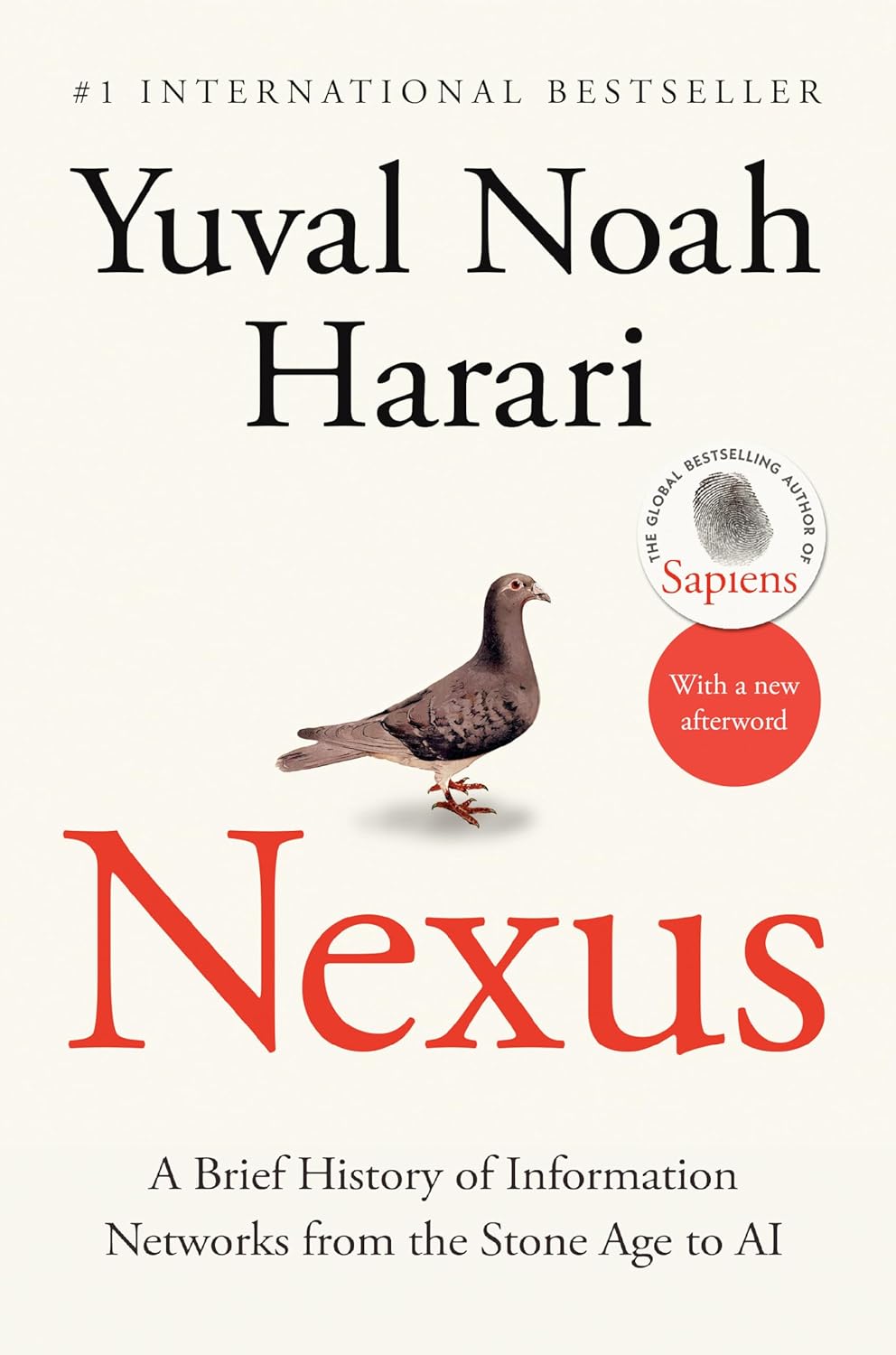
Yuval Noah Harari (2024)
Harari on AI as a new kind of intelligent agent — an ideal modern companion to PKD's questions about empathy, consciousness, and what is real.
Read Review

Frank Herbert (1965)
Sci-fi from the same era exploring messianic visions, ecology, and the line between human and more-than-human consciousness.
Read Review