← Back to Gallery
0 / 16
0:00 / 6:33
1984

1984

Book Review

Welcome To The Review

Welcome To The Review

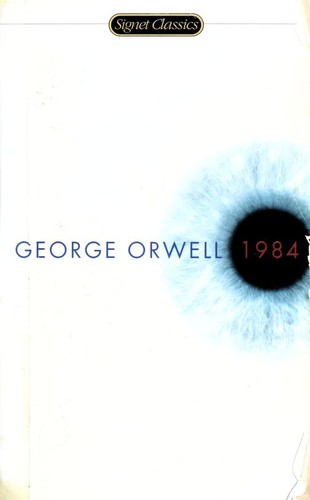
Hey everyone! Ian here. Welcome back to our must-read book review series. Today we are stepping into one of the most chilling, prophetic, and unforgettable novels ever written. If you have ever felt uneasy about surveillance cameras, data tracking, or the way language gets manipulated in politics, this book will haunt you. It is George Orwell's Nineteen Eighty-Four.

Who Was George Orwell

George Orwell was the pen name of Eric Arthur Blair, born in 1903 in British India. He was a journalist, essayist, and novelist who spent his life fighting against totalitarianism, imperialism, and social injustice. He fought in the Spanish Civil War, lived in poverty deliberately to understand the working class, and produced some of the sharpest political writing of the twentieth century. His real genius was not just in what he argued, but in how clearly he saw where the world was heading.

Who Was George Orwell
The Final Novel

The Final Novel

Nineteen Eighty-Four was published in 1949, just one year before Orwell's death at age forty-six. It was his final novel, and he wrote it while battling tuberculosis on a remote Scottish island. The book was an immediate sensation and has never been out of print since. It has sold tens of millions of copies, been translated into over sixty-five languages, and shaped how generations think about freedom, truth, and power. The novel is set in a dystopian future, the year 1984, in a world divided into three superstates locked in permanent war.

Winston Smith's Job

The story follows Winston Smith, a middle-aged man who works at the Ministry of Truth in the superstate of Oceania. His job is to rewrite historical records so they always match the current party line. If Big Brother promised bread rations that never arrived, Winston deletes the promise from every newspaper archive. If a party official falls out of favor, Winston airbrushes him out of every photograph and document. The party's slogan captures the insanity perfectly: "Who controls the past controls the future.

Winston Smith's Job
Who Controls The Past

Who Controls The Past

Who controls the present controls the past." Winston lives in a crumbling apartment under the constant gaze of a telescreen that watches and listens to him at all times. The Thought Police monitor every citizen for signs of dissent. Children are encouraged to spy on their parents. The official language, Newspeak, is being systematically stripped of words that could express rebellion. Concepts like freedom, justice, and individuality are being erased before they can even be thought.

A Secret Love Affair

Despite this suffocating environment, Winston secretly hates the Party. He begins a forbidden love affair with Julia, a young woman who shares his quiet rebellion. Together they rent a room above an antique shop, believing they have found a tiny corner of privacy and freedom. But in this world, there is no such thing as privacy. The shop owner, who seemed like a kindly old man, turns out to be an agent of the Thought Police. Winston and Julia are arrested, separated, and dragged to the Ministry of Love for torture and re-education.

A Secret Love Affair
Winston Is Broken

Winston Is Broken

What follows is one of the most devastating sequences in literature. Winston is broken not through physical pain alone, but through psychological destruction. The Party does not just want obedience. It wants him to genuinely love Big Brother. In the infamous Room 101, each prisoner faces their worst fear. For Winston, it is rats. The Party straps a cage of starving rats to his face, and in that moment of absolute terror, he betrays everything. He begs them to do it to Julia instead. After that, he is hollowed out, rebuilt, and released.

He Loves Big Brother

The novel ends not with rebellion, but with Winston sitting in a cafe, tears streaming down his face, as he realizes he truly loves Big Brother.

He Loves Big Brother
Why The Book Matters

Why The Book Matters

So what makes this book so powerful? First, Orwell understood that totalitarianism does not just control behavior; it controls reality itself. The Party's concept of "doublethink" means holding two contradictory beliefs simultaneously and accepting both. War is peace. Freedom is slavery. Ignorance is strength. Orwell saw that when a state can control language and history, it can make citizens doubt their own memories and perceptions.

It Is Terrifyingly Prophetic

Second, the book is terrifyingly prophetic. Written in 1949, it predicted mass surveillance, data manipulation, propaganda disguised as news, and the erosion of objective truth. In our age of deepfakes, algorithmic censorship, and endless information warfare, Orwell's warnings feel less like fiction and more like a user's manual for what to resist.

It Is Terrifyingly Prophetic
The Tragedy Of Failure

The Tragedy Of Failure

Third, the emotional core is devastatingly human. Winston is not a hero. He is an ordinary man who tries to resist and fails. That failure is the point. Orwell is showing us that totalitarian systems are designed to crush exactly this kind of quiet, private resistance. The tragedy is not that Winston is weak, but that the system is so perfectly designed to destroy human dignity.

Lean And Utterly Chilling

The writing is lean, precise, and utterly chilling. Orwell wastes no words on fancy prose. Every sentence carries weight. The world he builds feels lived-in, dusty, and exhausted. You can taste the grayness, smell the boiled cabbage, and feel the constant low-level anxiety of life under total surveillance.

Lean And Utterly Chilling
Who Should Read This

Who Should Read This

Now, who should read this? Everyone. Seriously. If you care about democracy, privacy, free speech, or human dignity, this book is essential. It is required reading in most high schools for good reason, but adults should revisit it too. The layers you miss as a teenager become devastatingly clear with age. The audiobook narrated by Simon Prebble is excellent. But the physical book has an advantage: you can underline passages, and you will want to. There are sentences on almost every page that make you stop and stare.

A Warning And A Mirror

In the end, Nineteen Eighty-Four is not just a dystopian novel. It is a warning, a mirror, and a call to vigilance. Orwell did not write it to depress us. He wrote it so we would recognize the signs before it was too late. The best tribute we can pay him is to read this book, remember what it says, and refuse to let it happen.

A Warning And A Mirror
Grab A Copy Today

Grab A Copy Today

Grab a copy today. Paperback, hardcover, or audiobook, any format works. Drop a comment below: what passage from this book hit you the hardest? And subscribe so you do not miss our next deep dive. Thanks for watching, everyone. Stay free, stay curious, and see you in the next one!

💬 Reader Thoughts

Email is required for anti-spam but can be fake if you prefer privacy.

Loading comments...