Book Review

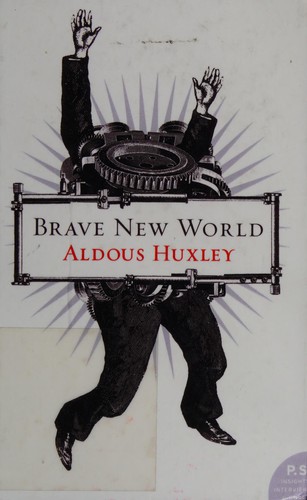
Brave New World by Aldous Huxley, published in 1932, stands as one of the most chilling prophetic novels ever written. While George Orwell gave us Big Brother with his face on a poster, Huxley gave us something far more insidious — a world where people genuinely love their oppression.
The story unfolds in a futuristic London, nine centuries after the Ford Model T rolled off the assembly line. Here, children are no longer born from wombs but manufactured in hatcheries, sorted into five castes before they're even embryos, and conditioned from birth to love their predetermined place in society. Alpha Plus intellectuals run things, Epsilon Minuses do the grunt work, and everyone is happy. Blissfully, chemically, relentlessly happy.

The protagonist, Bernard Marx, is an Alpha Plus who somehow didn't get the conditioning quite right. He's too tall, too interested in solitude and nature, too skeptical of the drug called soma that everyone pops like candy to holiday from reality. Bernard's existential crisis is the crack in the facade that lets us peer inside.
His love interest, Lenina Crowne, represents the perfect citizen — beautiful, popular, and utterly content with a world of casual sex, feel-good conditioning, and instant gratification. When they visit the Savage Reservation in New Mexico and bring back a Savage named John, things begin to unravel in spectacular fashion.


John was born to a woman from the World State who was stranded at the reservation, but he grew up reading Shakespeare and absorbing the myths of the old world. His reaction to civilization is both tragic and darkly comic. He rejects the orgy-porgy and finds the very concept of casual sex horrifying. He wants love, not pleasure. Mortality, not eternal youth. Purpose, not distraction.
The novel's most savage passages occur in the final third when John discovers that freedom and happiness might be fundamentally incompatible. Mustapha Mond, the Controller, explains it all with chilling logic: the World State chose stability over truth, over beauty, over goodness. It worked. No wars, no revolutions, no unhappiness worth mentioning. Just endless consumption, endless entertainment, endless soma holidays.


What makes Brave New World more terrifying than 1984 is that we can see ourselves getting there. Our phones deliver infinite distraction. Our algorithms serve us what entertains us. Our politics gives us enemies to rage against and tribes to belong to. Huxley's nightmare doesn't require a totalitarian boot on our face — just an algorithm that knows exactly how to keep us docile and consuming.
Huxley wrote Brave New World as a direct response to his own utopian thinking, as a warning about what a scientifically engineered utopia might actually cost. He was terrified not of the things that would frighten us, but of the things that wouldn't. The embrace of inferiority. The choice of sloth over grandeur. The preference for comfort over freedom.


The novel asks the question that haunts every technological age: just because we can engineer happiness, should we? What do we lose when we engineer away suffering, death, love, and meaning itself? What remains of being human when we've optimized every inconvenient feeling away?
Brave New World is essential reading, not because it's the most entertaining dystopia — it's bleak as hell — but because it forces us to ask uncomfortable questions about the nature of happiness and whether the life we're building is actually worth living. In a world increasingly engineered for contentment, Huxley's novel remains a vital reminder that some forms of suffering are the price we pay for being fully alive.


A masterpiece of speculative fiction that has only grown more relevant with each passing decade. Five stars — though it'll make you deeply uneasy.