











← Back to Gallery
0 / 16
0:00 / 6:08
Crime And Punishment

Crime And Punishment

Book Review

Dostoevsky's Prison Philosophy

Dostoevsky's Prison Philosophy

Hey everyone! Ian here! Welcome to our book review of Crime and Punishment by Fyodor Dostoevsky, published in 1866. Dostoevsky was no stranger to suffering. He spent four years in a Siberian labor camp after being arrested for his involvement in a utopian socialist circle — an experience that shattered his health and reshaped his philosophy for the rest of his life. When he sat down to write Crime and Punishment, he brought all of that with him. The result is one of the most intense psychological dissections in all of literature.

The Axe and the Attic

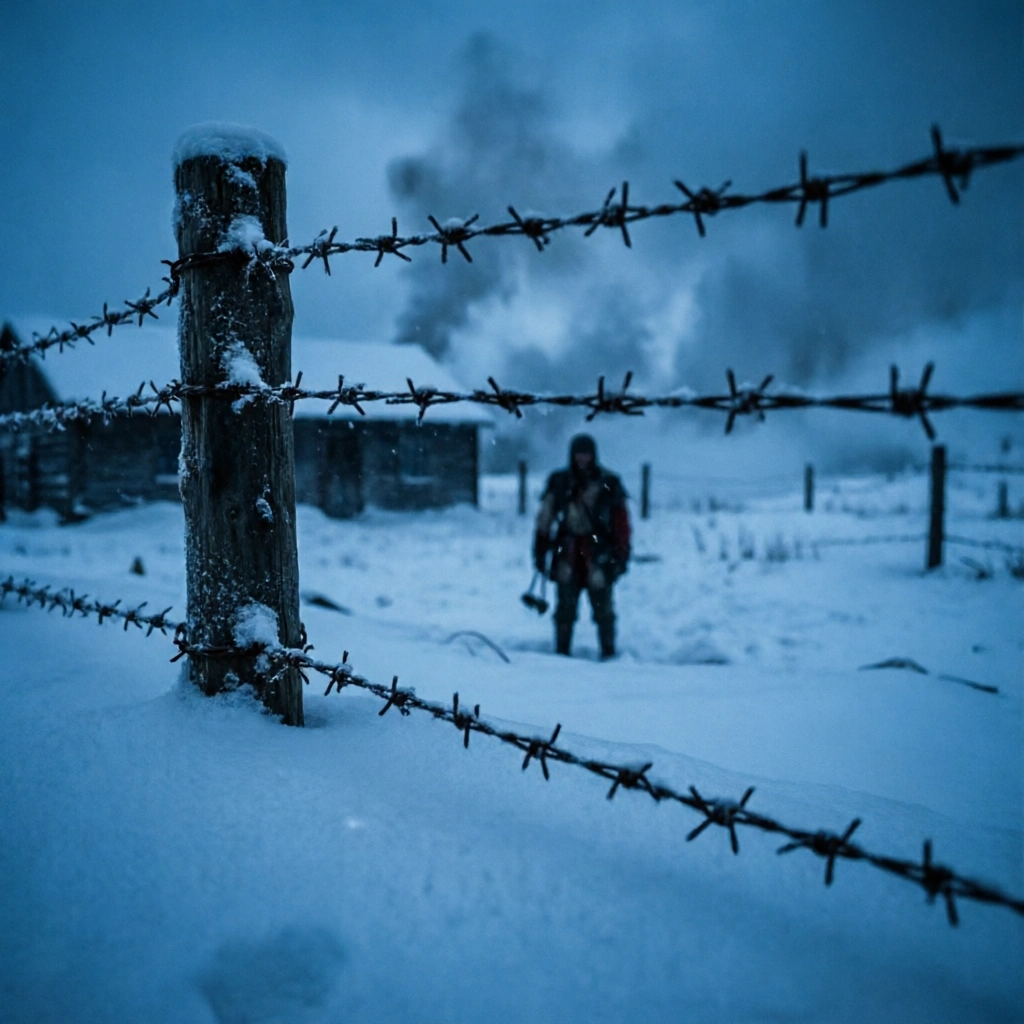
The novel follows Rodion Romanovich Raskolnikov, a destitute former student freezing in his cramped St. Petersburg attic room. He's brilliant, arrogant, and utterly convinced that poverty has stripped him of his humanity. One freezing night, he ventures to the apartment of Alyona Ivanovna, a despised old pawnbroker, and murders her with an axe. But she has a sister. Lizaveta walks in mid-act, and Raskolnikov kills her too.

The Axe and the Attic
Guilt Before the Verdict

Guilt Before the Verdict

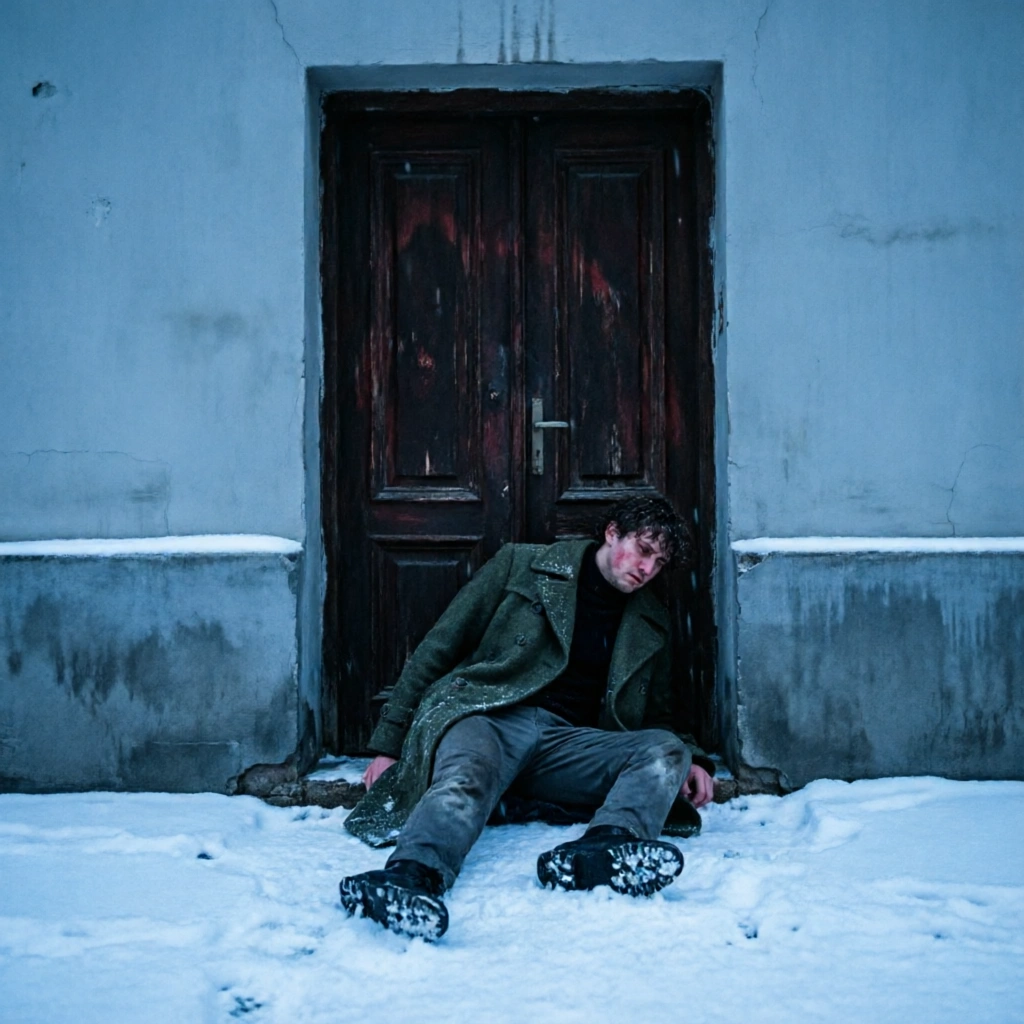
And then the real punishment begins — before any court, before any prison sentence. Raskolnikov cannot stop moving, cannot stop talking, cannot stop confessing in fragments to everyone around him. His body betrays him. He falls feverish, collapses in a doorway, runs from a detective who is slowly circling closer. Dostoevsky makes the reader feel every hour of this psychological torture with an intimacy that is almost unbearable.

The Tortured Conscience

Part Two of the novel is where the real artistry lives. Raskolnikov's guilt becomes a physical presence. He grows ill, delirious, haunted by dreams and visions. His sister Dunya and his devoted friend Razumikhin hover over him with desperate care, while the investigator Porfiry plays a cat-and-mouse game that feels less like a police interrogation and more like a philosophical duel. Raskolnikov argues with everyone — about morality, about suffering, about whether great men like Napoleon were above conventional law.

The Tortured Conscience
Rationalizing the Unthinkable

Rationalizing the Unthinkable

He cannot stop talking, cannot stop justifying, and every justification sounds more hollow than the last.

Sonia's Quiet Redemptive Power

Central to his redemption is a figure of extraordinary tenderness: Sonia Marmeladova, a young woman forced into prostitution to feed her desperate family. Sonia has suffered as much as Raskolnikov, perhaps more, and she has done it without his rationalizations, without his theory of the extraordinary man. When Raskolnikov finally reads her the letter from Lizaveta's friend Pulcheria Alexandrovna, their eyes meet, and Sonia simply kneels before him and weeps. It is one of the most quietly devastating scenes in world literature.

Sonia's Quiet Redemptive Power
Breaking Before Confession

Breaking Before Confession

Raskolnikov's path to confession is neither sudden nor clean. He resists, relapses, retreats into his prideful theory. Dostoevsky refuses to give us a simple conversion moment. The novel suggests that redemption comes through suffering, through love, and perhaps most of all through the simple impossibility of carrying guilt alone — a weight designed for two shoulders, not one.

The Universal Crime Question

What makes Crime and Punishment endure is that Raskolnikov's inner conflict is not some distant Russian problem. His question — am I special enough to break the rules, or am I just another ordinary person with ordinary limitations? — is a question anyone who has ever felt entitled to something they hadn't earned has had to face. Dostoevsky shows us that the answer we want to be true and the answer that is true are often very different things, and the gap between them is where we do our deepest living.

The Universal Crime Question
Using Suffering vs. Being Crushed

Using Suffering vs. Being Crushed

Dostoevsky was a master of the revealing quote. Early in the novel, he writes: "I did not bow down to you, I bowed down to all the suffering of humanity." This is Raskolnikov's self-serving philosophy in a single sentence — and Dostoevsky lets it hang there long enough for us to see both its nobility and its danger. Later, when Raskolnikov finally breaks, he tells Sonia: "I did not bow down to you, Sonia, but I bowed down to all the suffering of humanity." The repetition is deliberate.

The Deliberate Repetition

Dostoevsky wants us to hear the difference between using suffering as a philosophy and being crushed by it.

The Deliberate Repetition
Resurrection at Rock Bottom

Resurrection at Rock Bottom

Here is another passage that cuts to the heart of the novel's moral vision. Raskolnikov reflects: "I did not understand that at the time it was already the beginning of a new life, the resurrection, the entry into a new world." He is speaking of his suffering, but the irony is devastating — his new life begins not with the murder but with its consequences, not with his theory but with its failure.

Broken Open to Let Others In

Dostoevsky's argument, made across hundreds of pages of psychological detail, is that we do not grow by pursuing our own greatness but by being broken open enough to let other people in.

Broken Open to Let Others In
Cowardice the Root of All Vices

Cowardice the Root of All Vices

And Razumikhin, the novel's warmest character, offers perhaps the most humane summary: "Man is sometimes terribly, impossibly, inhumanly obstinate in his vices and failings, but especially in his cowardice, which is the root of all other vices." Dostoevsky is not writing a morality tale. He is diagnosing a condition that he recognizes in himself and in every reader, with a precision that leaves no comfortable hiding place.

Among Literature's Finest Hours

Crime and Punishment is not a comfortable read, and it is not meant to be. But for anyone drawn to fiction that asks the largest questions — about guilt and innocence, about what we owe each other, about whether suffering can be redemptive — it is among the finest hours of the human imagination. Dostoevsky survived the labor camp, survived poverty, survived epilepsy and depression and the death of his first wife and child. He survived all of that, and then he wrote this. That fact alone is worth sitting with for a while.

Among Literature's Finest Hours
Find a Quiet Afternoon and Read

Find a Quiet Afternoon and Read

If you have not read it, go find a good translation — the Constance Garnett translation or the newer Pevear and Volokhonsky version are both respected — find a quiet afternoon, and settle in. It will take everything you have. That is the point. Thanks for watching, and happy reading!

📚 You Might Also Like

Moby-Dick

Moby-Dick

Herman Melville

An obsession that destroys both the hunter and the hunted — literature's most sustained meditation on the cost of single-minded obsession

Read Review

1984

1984

George Orwell

A totalitarian nightmare about the psychology of control — what guilt, confession, and self-destruction look like when the state engineers them

Read Review
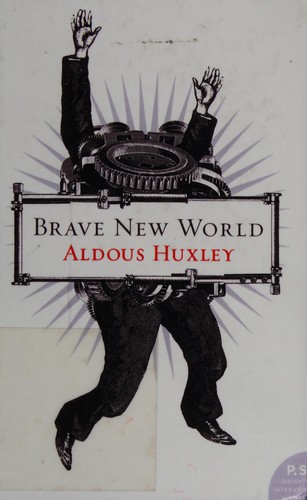
Brave New World

Brave New World

Aldous Huxley

A utopia built on the suppression of individual suffering — the opposite extreme of Raskolnikov's freedom, and equally dangerous

Read Review
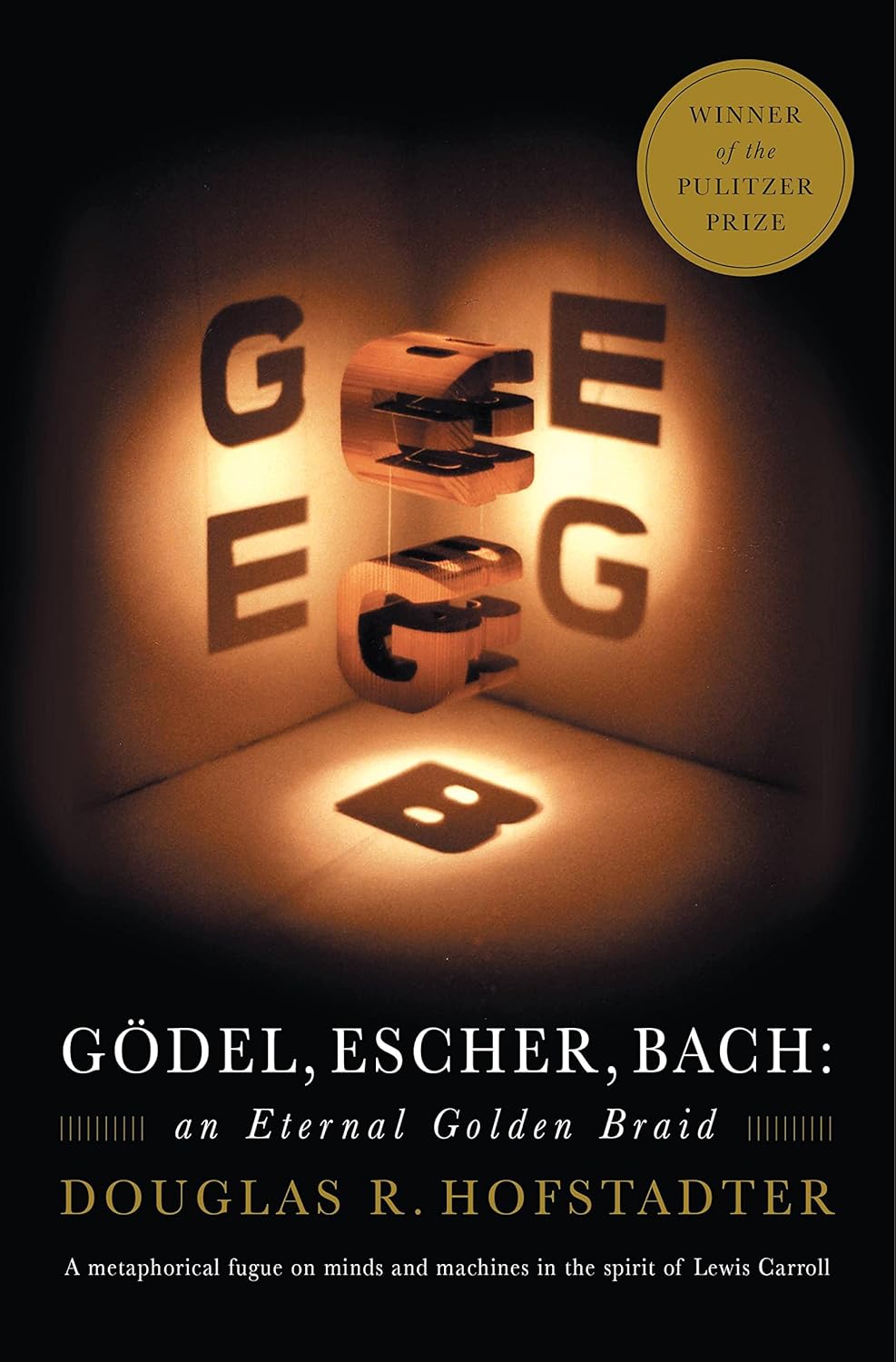
Gödel, Escher, Bach

Gödel, Escher, Bach

Douglas Hofstadter

An ancient mariner's mathematical odyssey through self-reference, recursion, and the strange loops that make minds possible

Read Review

💬 Reader Thoughts

Email is required for anti-spam but can be fake if you prefer privacy.

Loading comments...