Book Review

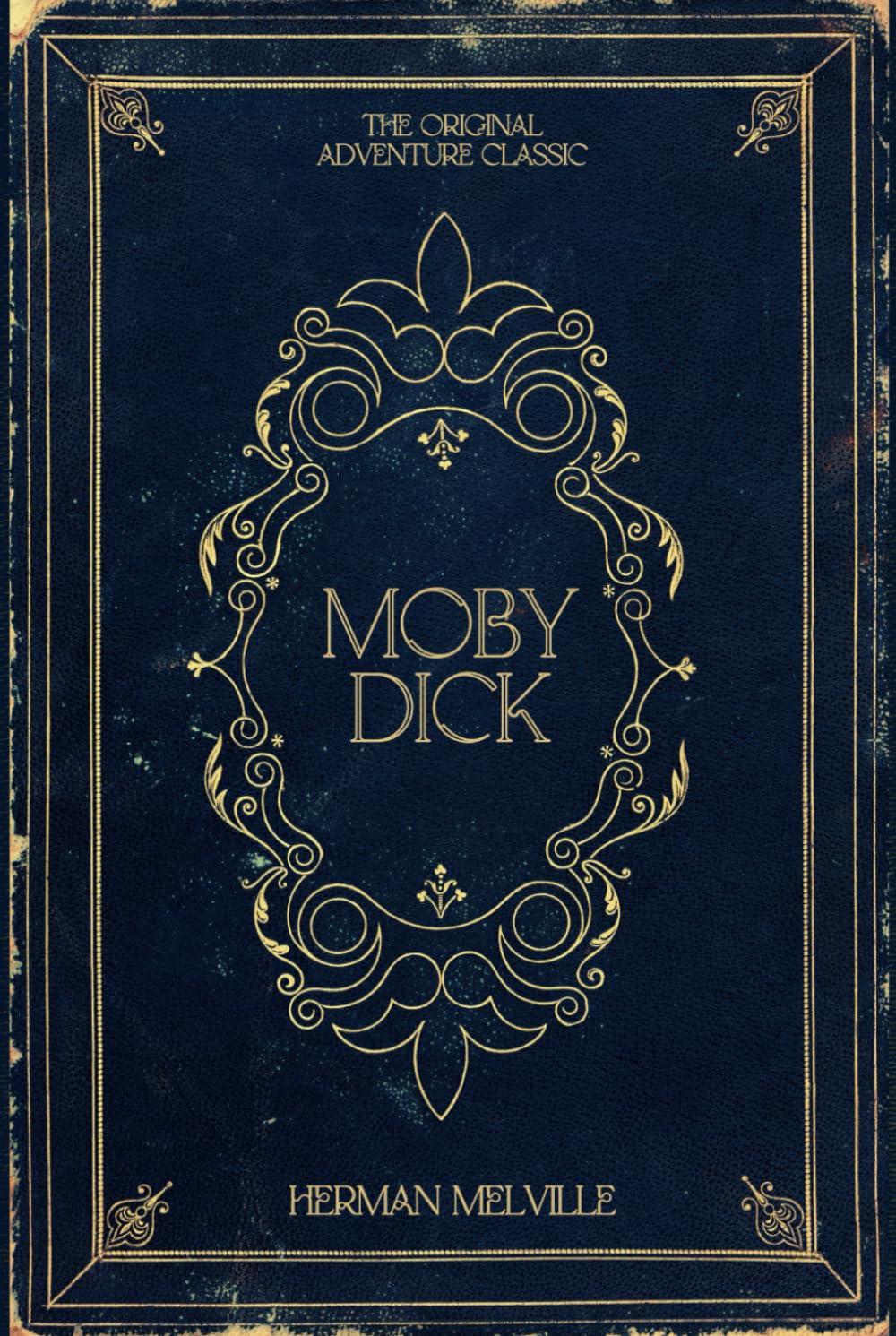
Hey everyone! Ian here! Welcome to our book review. Today we're diving into one of the most towering achievements in all of American literature, a book that was practically ignored when it first came out but is now considered absolutely essential reading. I'm talking about Moby-Dick, or The Whale, by Herman Melville, published in 1851. If you've ever heard the name Captain Ahab or wondered about the story behind that famous white whale, stick around, because this book is so much more than you think.
Herman Melville was born in New York City in 1819 into a once-prominent family that fell on hard times after his father's death. Melville worked as a schoolteacher, a bank clerk, and most importantly, as a sailor on merchant vessels and a whaling ship. His experiences at sea, particularly his time aboard the whaler Acushnet and his adventures in the South Pacific, became the raw material for his early successful novels like Typee and Omoo. But Melville wanted to be taken seriously as a literary artist, not just an adventure writer.


Moby-Dick was his ambitious attempt to write the great American epic, blending Shakespearean tragedy with encyclopedic knowledge of whaling and deep philosophical inquiry. The book was published in 1851 by Harper and Brothers in the United States and Richard Bentley in the United Kingdom, running about 635 pages in the American edition. It sold poorly, received largely negative reviews, and essentially ended Melville's career as a popular novelist. He died in 1891 largely forgotten.
It wasn't until the 1920s, during the Melville Revival, that critics and readers rediscovered this book and recognized it as a masterpiece. Today it sits at the absolute pinnacle of the American literary canon.


So what's the story? Our narrator is Ishmael, a thoughtful young man who decides to go to sea aboard a whaling ship to escape the despair and isolation of life on land. He arrives in New Bedford and shares a room at the Spouter-Inn with Queequeg, a heavily tattooed South Sea Islander who turns out to be a gentle soul and becomes Ishmael's closest friend. Together they sign on to the Pequod, a whaling vessel out of Nantucket. But as they set sail, they begin to realize that something is deeply wrong with their captain.
Captain Ahab has lost his leg to a monstrous white sperm whale named Moby Dick on a previous voyage, and he has spent the entire time since that encounter brooding in his cabin, nursing a single all-consuming obsession: to find and kill that whale. Ahab nails a gold doubloon to the mast and promises it to the first man who spots Moby Dick. He slowly bends the entire crew to his will, even the first mate Starbuck, who privately believes the quest is mad and sinful but cannot muster the courage to stop it.


The Pequod sails across the Atlantic, around the Cape of Good Hope, and into the Indian and Pacific Oceans, encountering other whaling ships and gathering news of the white whale's movements. Along the way, Melville gives us incredible detailed chapters on the anatomy of whales, the history of whaling, the mythology surrounding these creatures, and the philosophical questions they raise. The final confrontation comes in the Pacific, where the Pequod finally catches up to Moby Dick.
Over three days of pursuit, the whale destroys the crew's whaleboats and ultimately smashes the Pequod itself, sinking the ship and drowning everyone aboard except Ishmael, who survives by clinging to Queequeg's coffin-turned-life-buoy until he is rescued by another ship. And that is the devastating end of the voyage.


Now, fair warning: that synopsis contained major spoilers, but honestly, the power of Moby-Dick isn't in plot twists. It's in the journey, the language, and the ideas. Let's break down what Melville is really doing here. First, the theme of obsession and monomania. Ahab isn't just hunting a whale. He's hunting the very symbol of evil, fate, and the indifferent cruelty of the natural world. He says, and I quote, "All visible objects, man, are but as pasteboard masks.
But in each event, in the living act, the undoubted deed, there, some unknown but still reasoning thing puts forth the mouldings of its features from behind the unreasoning mask." Ahab believes that behind every visible thing lurks a hidden meaning, and he is determined to strike through that mask. This is one of the deepest meditations on obsession ever written.

Second, the theme of fate versus free will. Ahab constantly insists that he is acting of his own free will, that he chooses this quest. But the novel repeatedly suggests otherwise. The names of the crew members, drawn from prophecies and omens, the eerie predictions of the Parsee Fedallah, and the sense of inevitable doom all point toward a predetermined tragedy. Starbuck represents the voice of reason and conscience, and his failure to stop Ahab is one of the novel's most heartbreaking elements.
Third, the relationship between humanity and nature. The whale is not evil. Moby Dick is simply a whale acting according to whale nature. Ahab projects all of his rage and grief onto this creature, but the whale itself is indifferent. This raises profound questions about whether human beings can ever truly understand or master the natural world. Melville writes with astonishing detail about whale anatomy and whaling techniques, making the book almost an encyclopedia of its subject, but always in service of these larger philosophical questions.


Fourth, the theme of friendship and human connection. The bond between Ishmael and Queequeg is one of the most beautiful in literature. Two men from utterly different worlds who find kinship and understanding across cultural divides. Ishmael says, "Better sleep with a sober cannibal than a drunken Christian." Their friendship provides a brief but genuine warmth in an otherwise cold and terrifying universe.
Fifth, the search for meaning in an apparently meaningless universe. The novel is full of religious symbolism, from the biblical names to the sermons to the numerous references to Job and his suffering. Father Mapple's sermon on Jonah at the beginning of the book sets the theological stage, but the novel ultimately offers no easy answers. Is there a God? Is there justice? Or are we simply at the mercy of blind forces? Melville lets these questions hang in the air.


One of the most famous passages in the book comes in Chapter 36 when Ahab addresses his crew and declares his purpose: "From hell's heart I stab at thee. For hate's sake I spit my last breath at thee. Thou damned whale!
Thus, I give up the spear!" And another, quieter but equally powerful moment when Ishmael reflects on the whale's whiteness in Chapter 42: "Though in many of its aspects this visible world seems formed in love, the invisible spheres were formed in fright." The prose is dense, allusive, sometimes funny, sometimes terrifying, always extraordinary.


Critical reception has done a complete one-eighty since 1851. Modern critics routinely rank Moby-Dick among the greatest novels ever written. On Goodreads it holds an average rating of around 3.5 out of 5, which honestly reflects the fact that it's a challenging read. Many readers find the encyclopedic chapters on whaling slow going. But those who stick with it discover one of the richest, most rewarding reading experiences in all of literature. It's been adapted into films, plays, operas, and even a famous Led Zeppelin song.
Why does this book deserve your time? Because it is genuinely timeless. The questions Melville asks about obsession, leadership, the relationship between humanity and nature, and the search for meaning are as urgent today as they were in 1851. In an age of social media-fueled obsessions, of leaders who bend entire populations to their will, of environmental crises that force us to confront our place in the natural world, Moby-Dick speaks with astonishing relevance. This is not an easy book.


It demands patience, attention, and a willingness to wrestle with difficult ideas. But if you give yourself over to it, if you let Ishmael be your guide across those vast waters, you will emerge changed. The ideal reader is anyone who loves language, anyone fascinated by the sea, anyone who has ever felt the pull of obsession, and anyone who believes that literature should grapple with the biggest questions of existence.
So here's my call to action. Pick up Moby-Dick. Don't be intimidated by its size or its reputation. Read it slowly. Savor the language. Let the chapters on whale anatomy wash over you like the ocean itself. Follow Ahab to his inevitable end, and let Ishmael's survival remind you that even in the wreckage of obsession and destruction, there is always the possibility of witness, of story, of meaning. This is one of the greatest books ever written, and it is waiting for you. Thanks for watching, and happy reading!
