Book Review

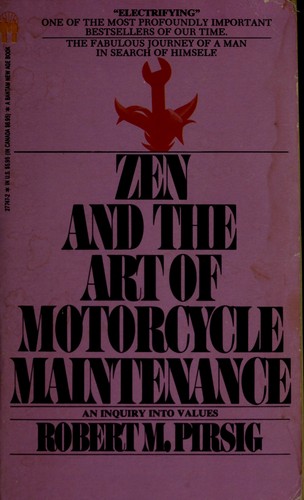
Hey everyone! Ian here! Welcome to our book review. Today we're tackling one of the strangest, most ambitious, and most personal books ever to become a runaway bestseller — Zen and the Art of Motorcycle Maintenance, by Robert Pirsig, published in 1974. The subtitle is An Inquiry into Values, and that's a much better description of what this book actually is. It is not really about Zen. It is not really about motorcycles. It is about how to live.
Robert Pirsig wrote this book after a complete mental breakdown that ended with him being hospitalized and given electroconvulsive shock therapy. He had been a brilliant philosophy student, a rhetoric professor, and a man who chased a single question so relentlessly that it broke him. He was diagnosed with what was then called paranoid schizophrenia. The man who came back from the hospital was, in a sense, a different person. The old self, the one Pirsig calls Phaedrus, was gone. Or so he thought.


This book is the journey of that new man trying to understand what happened to the old one — and trying to recover what was true in his ideas without being destroyed by them again. Pirsig submitted the manuscript to one hundred and twenty-one publishers before it was finally accepted. It went on to sell over five million copies. It became one of the most influential philosophical books of the twentieth century. And it is, quite possibly, the only book of serious metaphysics most people have ever finished.
Let me tell you what happens in it. On the surface, the plot is simple. A father and his eleven-year-old son Chris are taking a long motorcycle trip from Minnesota across the American West, with two friends, John and Sylvia, riding alongside. They camp. They eat in diners. They argue. They climb mountains. The father — the unnamed narrator, who is Pirsig himself — uses the long stretches of road to deliver what he calls a Chautauqua, an old-fashioned traveling lecture series, except this one happens inside his own head.


He reflects on technology, on craftsmanship, on his estranged son, and most of all on the ghost of the man he used to be — Phaedrus — whose obsession with a single concept called Quality drove him into madness.
So really there are three stories happening at once. The road trip. The philosophical lectures. And the slowly surfacing memories of Phaedrus, the brilliant, dangerous self that the narrator has buried but cannot fully escape. The genius of the book is how Pirsig braids these together. A flat tire becomes a meditation on rationality. A conversation about a leaky faucet becomes an inquiry into what makes any work good. The motorcycle itself becomes a metaphor for the mind. Now let's get into the big ideas. There are four that anchor the book.


First — the split between Classical and Romantic understanding. Pirsig opens the book with this distinction. The Romantic sees a motorcycle and feels an emotional response — beautiful, ugly, exciting, boring. The Classical sees a motorcycle and sees the underlying mechanism — the components, the relationships, the function. His friend John is a Romantic. He hates fixing his bike. He wants the experience without the underpinnings. Pirsig is a Classical. He wants to understand.
The book argues that Western culture has split these two modes of seeing and that the split is destroying us. Romantics dismiss technology as soulless. Classicists dismiss feeling as irrational. Both are half a person. The book is a quest for the unifying principle that can heal the split.


Second — the metaphysics of Quality. This is the great obsession. Phaedrus, before his breakdown, became convinced that there was a third thing, a thing prior to and underneath both subject and object, both reason and feeling. He called it Quality. You can't define it, but you know it when you see it. A well-made knife has it. A well-told story has it. A well-fixed motorcycle has it. Pirsig argues that Quality is not a property of the object, and not a property of the observer, but the event in which the two meet. It is the moment of caring.
The moment of attention. And he goes further — he argues that Quality is the source of both subject and object, the ground from which all reality emerges. This is not a small claim. This is Pirsig trying to overturn two thousand years of Western philosophy from the seat of a motorcycle.


Third — the importance of caring. This is where the book becomes practical. If you don't care about what you're doing, the work will be bad. If you do care, the work will be good. This sounds simple. It is not. Pirsig argues that modern technological civilization has systematically removed caring from work. The mechanic doesn't care about your bike. The clerk doesn't care about your problem. The teacher doesn't care about your learning. Quality has been driven out by efficiency, by metrics, by the assembly line of human attention.
The cure, he says, is not to reject technology. It is to bring caring back into our relationship with it. To fix your own motorcycle. To pay attention. To love the thing you're working on, whatever it is.


Fourth — gumption, and the gumption traps. This is one of the most useful and least famous parts of the book. Pirsig spends a long section talking about the practical psychology of doing good work. Gumption is the willingness to keep going, the energy to engage with a problem. Gumption traps are the things that drain it. There are external traps — out-of-sequence reassembly, the intermittent failure, the parts you can't get. And there are internal traps — anxiety, boredom, impatience, ego.
Pirsig walks through them like a doctor talking through an illness. He is teaching you, very practically, how to not lose your mind when fixing something. Which, of course, is also how to not lose your mind in general.


And then there is Phaedrus. Always Phaedrus. The ghost in the book. As the trip goes on, the narrator's memories of his former self return more and more. We learn what he taught at the university. We learn how his question about Quality got him fired. We learn how it consumed him. And we begin to understand that Chris, the son, has a kind of bond with Phaedrus that the new narrator does not. The boy keeps asking, in different ways, where his real father went. The book builds toward a confrontation that is genuinely heartbreaking.
Without spoiling it — there comes a moment, in the fog on a California cliff, when the narrator has to choose what to do with the ghost. It is one of the most quietly devastating endings in twentieth-century literature.


Let me give you some lines, in Pirsig's own words, that will stay with you long after the book is closed. He writes: The real cycle you're working on is a cycle called yourself. He writes: We're in such a hurry most of the time we never get much chance to talk. The result is a kind of endless day-to-day shallowness, a monotony that leaves a person wondering years later where all the time went and sorry that it's all gone. He writes: The truth knocks on the door and you say, go away, I'm looking for the truth, and so it goes away. Puzzling.
He writes: Quality — you know what it is, yet you don't know what it is. But that's self-contradictory. But some things are better than other things, that is, they have more quality. But when you try to say what the quality is, apart from the things that have it, it all goes poof! There's nothing to talk about. And finally: To live only for some future goal is shallow. It's the sides of the mountain which sustain life, not the top.


This last line is the heart of the book. The peak experience matters less than the climb. The destination matters less than the attention paid along the way.
So how do I rate it? I'm giving it five stars out of five. This book is not for everyone. It is slow. It is dense. It demands patience. It will sometimes make you furious. But if you stay with it, it does something almost no other book can do — it changes the way you look at ordinary objects. After Pirsig, you cannot look at a wrench, or a faucet, or a fence, or a job, in quite the same way again. You start to ask whether you are paying attention. You start to ask whether you care. And those questions, once asked, do not go away.


This book pairs beautifully with Marcus Aurelius's Meditations — another quiet manual for a mind under pressure. It pairs with The Tao of Pooh for those wanting a gentler entry into Eastern thought through Western form. It pairs with Man's Search for Meaning, because both books are written by men who had to find meaning the hard way. And if you are interested in the philosophy of work and craft, it pairs with Matthew Crawford's Shop Class as Soulcraft, which extends Pirsig's argument into the twenty-first century.
A final note. Pirsig's son Chris, the boy on the back of the motorcycle in this book, was murdered outside a Zen center in San Francisco in 1979, five years after the book came out. Pirsig added an afterword to later editions that is one of the most haunting things you will ever read. It changes the meaning of everything that came before. Read it. Then sit with it for a while.


This is Zen and the Art of Motorcycle Maintenance. It is a book about how to live. It is a book about how to fix things, including yourself. It is a book that almost wasn't published, that almost wasn't written, that almost killed its author. And it is, in my opinion, one of the most important books of the modern age. I cannot recommend it highly enough. Thanks for listening, and as always — keep reading.
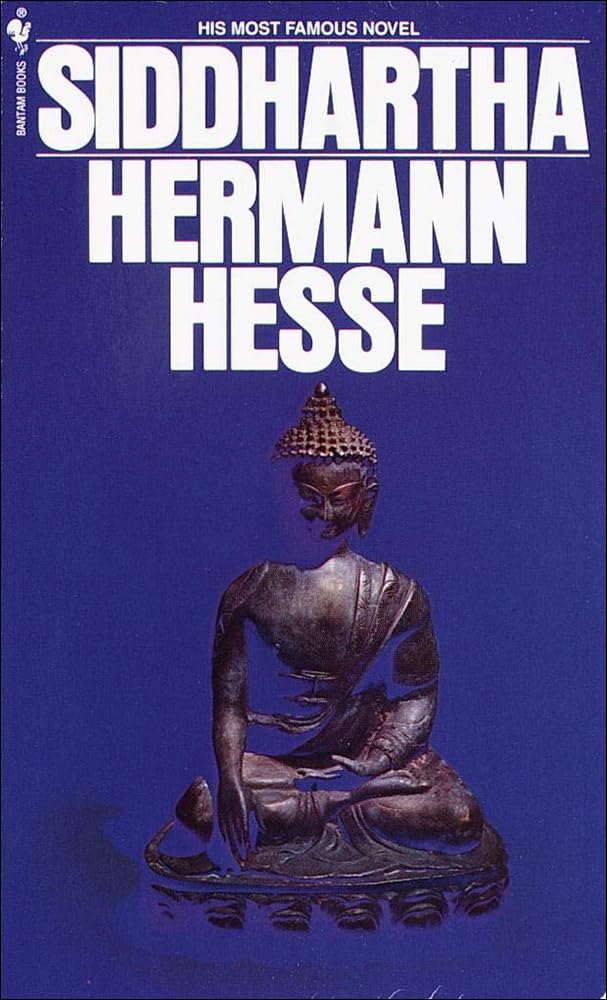
Hermann Hesse (1922)
A young man's spiritual journey toward direct experience over doctrine — the Eastern counterpart to Pirsig's Western inquiry into Quality and the moment of attention.
Read Review

Don Miguel Ruiz (1997)
A short, life-changing wisdom book that distills a few simple principles for transforming how you live and think — pairs naturally with Pirsig's call to attention and care.
Read Review
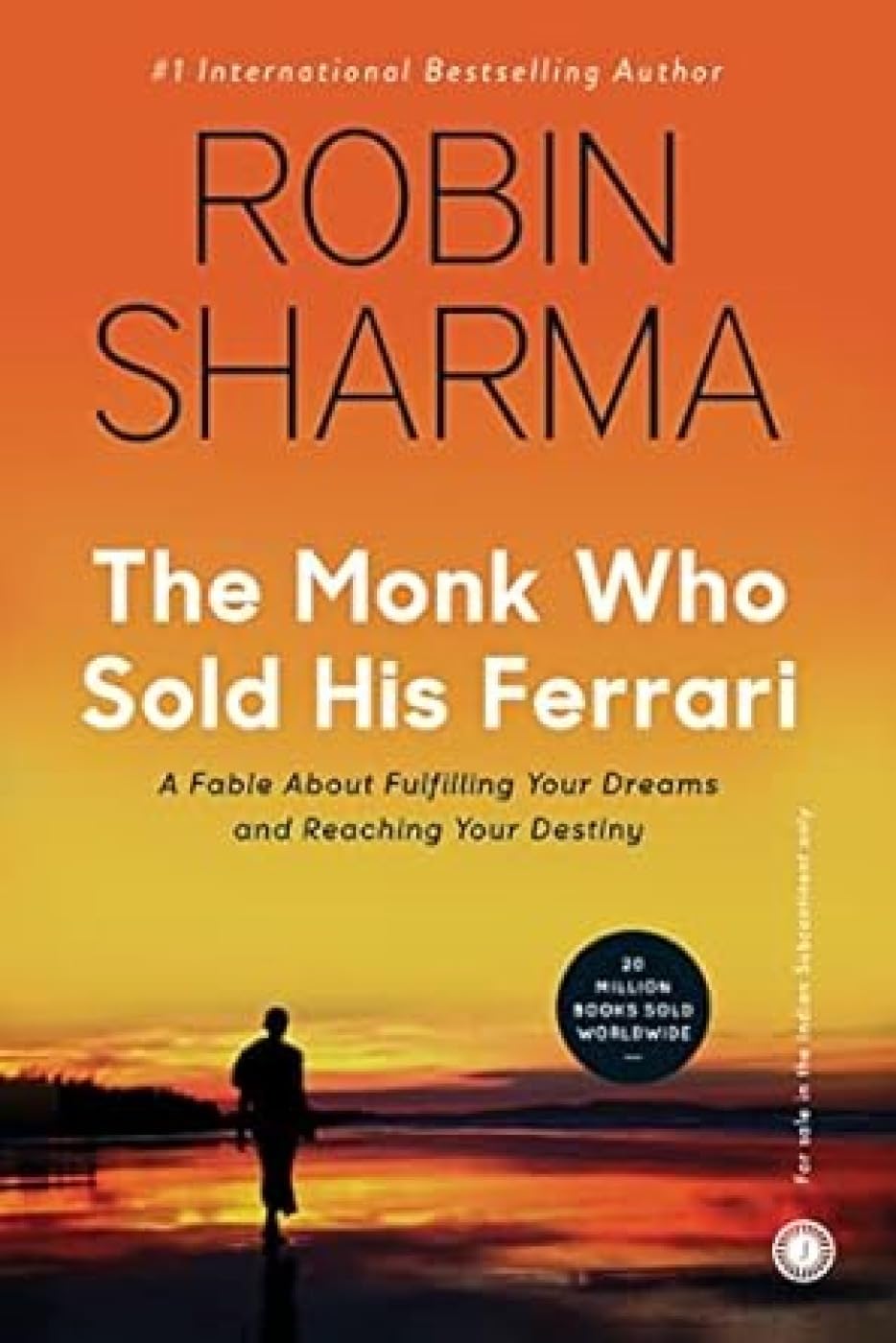
Robin Sharma (1997)
A modern Western parable about leaving a high-pressure life to find meaning — the accessible cousin to Pirsig's deeper philosophical journey.
Read Review

Oliver Sacks (2015)
Sacks's final essays — a doctor and writer paying close, careful attention to the work of living and dying. The same Quality of attention Pirsig spent his life chasing.
Read Review
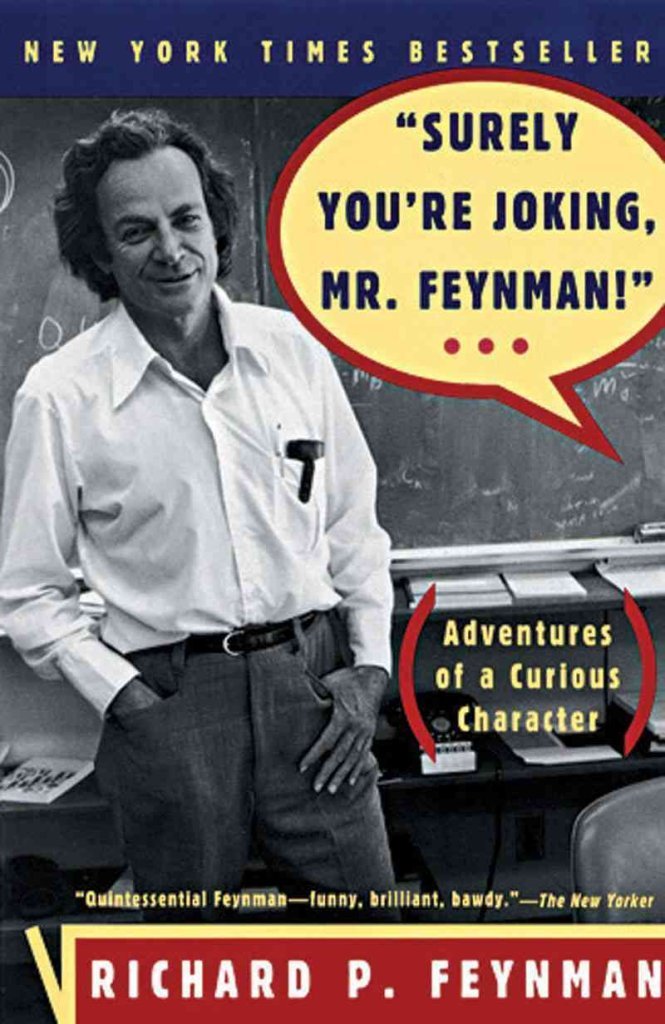
Richard Feynman (1985)
Feynman's playful insistence on understanding things from first principles is the scientist's version of Pirsig's mechanic — caring deeply about how the thing actually works.
Read Review