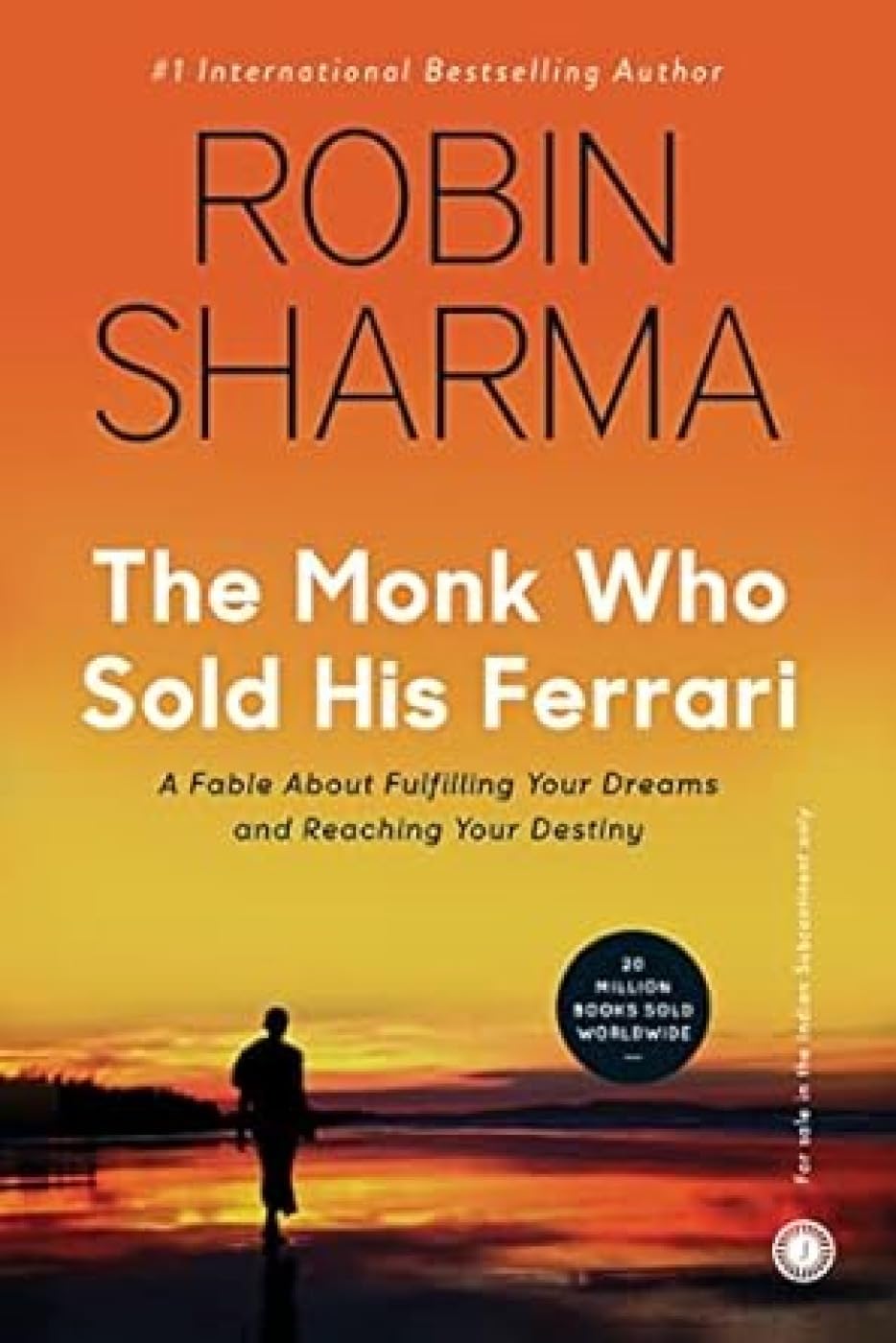
Robin Sharma (1997)

Hey everyone! Ian here! Welcome to another book review. Today, I'm talking about a book that genuinely changed how I think about life — The Monk Who Sold His Ferrari: A Fable About Fulfilling Our Dreams and Reaching Your Destiny by Robin Sharma. This was published back in 1997 and since then, it's sold millions of copies around the world and been translated into dozens of languages. And let me tell you, this book hit me hard the first time I read it.
I love this book so much that I grabbed the audiobook and listened to it on a flight to Aruba back in 2019. It was so inspiring that I listened to the whole thing again on the way back home too. That's the kind of book this is.


Now, let's talk about the author. Robin Sharma is a fascinating guy — he was a highly successful litigation lawyer in Canada, but at age 25, he walked away from his law career to dedicate his life to writing and speaking about personal mastery and leadership. He founded Sharma Leadership International Inc. and has since become one of the world's top leadership experts, coaching Fortune 500 companies and working with CEOs worldwide.
So this isn't just theory from someone who read a few books — this is coming from a guy who lived the high-pressure, high-stakes life and chose something deeper.


So what's this book actually about? It's a fable — a story — about a man named Julian Mantle. Julian is a superstar litigation lawyer. He has it all — the corner office, the six-figure salary, the luxury cars, the vacation homes, the respect of his peers. He's living the dream, right? Except one day, he collapses in the middle of a courtroom from a massive heart attack. And that near-death experience becomes his wake-up call. Julian realizes that all his success means nothing if he's not healthy and happy.
So he sells everything — including his prized red Ferrari — and journeys to India, where he seeks out a mystical culture of Himalayan sages known as the Sages of Sivana. There, he learns the secrets of a fulfilled life and brings them back to share with the world. The story is told through a conversation between Julian and his former law partner, who becomes the student learning all these transformative principles.


And that brings us to the heart of the book — the seven timeless principles of personal mastery and the ten rituals of radiant living. Let me break down the seven principles. First is mastering your mind — Julian learns that the mind is a garden, and what you plant in it determines what grows. Second is following your purpose — finding your life's mission and pursuing it with passion. Third is the principle of Kaizen, which is continuous improvement, always getting one percent better.
Fourth is living with discipline — doing what needs to be done, even when you don't feel like it. Fifth is respecting your time — treating each moment as precious. Sixth is selflessly serving others, because true fulfillment comes from contribution. And seventh is embracing the present moment — because that's really all we ever have.


The ten rituals of radiant living are just as powerful. They include the ritual of solitude — spending time alone in silence every day, even if it's just a few minutes. The ritual of physicality — taking care of your body through exercise. The ritual of live nourishment — eating foods that actually fuel you. The ritual of abundant knowledge — committing to lifelong reading and learning. The ritual of self-reflection — keeping a journal and examining your own thoughts.
The ritual of early rising — waking up before the rest of the world to get a head start on your day. The ritual of music — surrounding yourself with uplifting sounds. The ritual of the spoken word — using positive affirmations to reprogram your thinking. The ritual of a congruent character — making sure your actions match your values. And the ritual of simplicity — living with less clutter, less stress, less noise.


One of my favorite quotes from the book is this: "Your I can is more important than your IQ." It cuts through all the complexity and reminds you that belief in yourself matters more than raw intelligence. Another great one: "The mind is a wonderful servant but a terrible master." When you let your thoughts run wild without discipline, they'll destroy you. But when you train your mind to serve you — that's when real transformation happens. And this one still gives me chills: "The purpose of life is a life of purpose."
So why should you read this book? Honestly, because it works. The rituals and principles Sharma lays out aren't complicated. They're simple, actionable, and profoundly effective. This isn't dense philosophy you need a degree to understand. It's a story — engaging, relatable, and emotional — that slips these life-changing ideas into your brain before you even realize what's happening. Whether you're feeling stuck in your career, overwhelmed by the rat race, or just looking for a deeper sense of meaning, this book will speak to you.


It's particularly powerful if you're someone who's already checked a lot of boxes — you have the job, the money, the stuff — but somehow still feel empty. Julian Mantle's story is your story. And the good news is, there's a way out.
In conclusion, The Monk Who Sold His Ferrari isn't just a book you read — it's a book you live. It's a reminder that the most important journey you'll ever take is the one inward. Read it, apply the rituals, and watch your life change. I'll put a link to it in the gallery so you can check it out. Thanks for watching, and as always — happy reading!

Explore more books in the full gallery