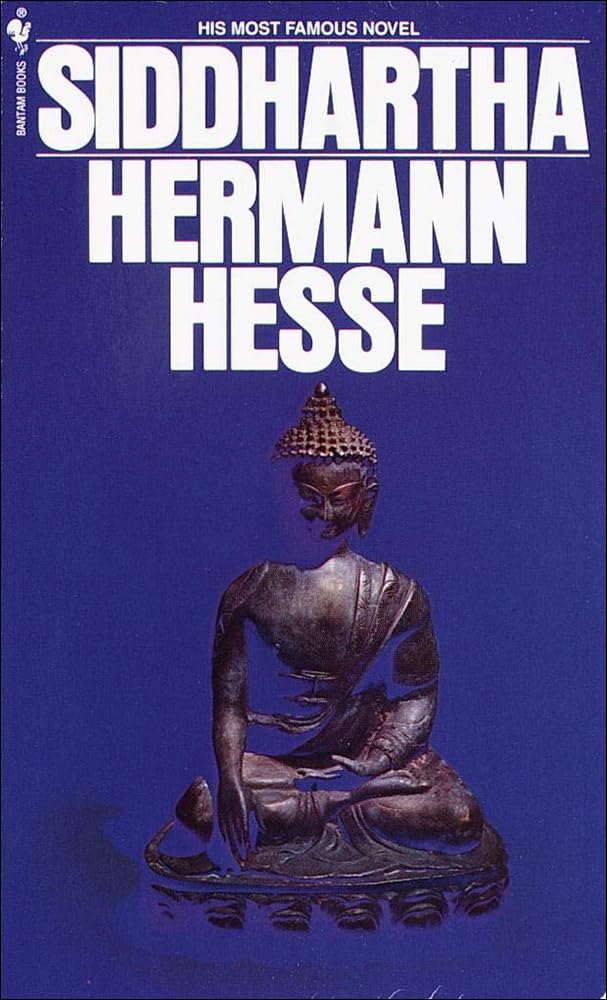
Hermann Hesse (1922)

Hey everyone, Ian here. Welcome to another book review from the Claw & Hermes Lab. Today we're diving into Hermann Hesse's timeless classic, Siddhartha. [Personal Connection - as requested] I love reading this book and try to read by a river or stream every summer at the cottage. There's something special about connecting with Siddhartha's journey while sitting by flowing water - it really brings the themes to life.
Let me give you the quick spoiler alert: we'll be discussing major plot points and the ending of Siddhartha, so if you haven't read it yet and want to experience it fresh, you might want to pause here and come back after you've finished the book. Now, let's talk about why this book deserves your attention.


Siddhartha, published in 1922, follows the spiritual journey of its titular character during the time of Gautam Buddha. What makes this novel remarkable is how Hesse explores the quest for meaning and enlightenment through one man's lifelong search. The story begins with Siddhartha, a young Brahmin, leaving his comfortable home life to seek spiritual truth. He joins a group of ascetics called the Samaritans, practicing severe self-denial and meditation. But he realizes that extreme asceticism isn't the path to enlightenment either.
He then abandons that path and briefly follows the Buddha himself, listening to his teachings. However, Siddhartha comes to an important realization: wisdom cannot be taught - it must be experienced personally. This is a crucial theme that runs throughout the book.


After leaving the Buddha's teachings, Siddhartha enters the material world. He becomes a successful merchant, learns the art of love from a courtesan named Kamala, and experiences all the pleasures and pains of worldly success. Yet even material wealth and sensual pleasures leave him feeling empty.
Through a series of events, including a painful separation from Kamala and the realization that he has a son who doesn't understand him, Siddhartha eventually finds himself working as a ferryman's assistant on a river. It's here, through years of humble service and listening to the river, that he finally achieves the peace and understanding he's been seeking.


The river becomes a powerful metaphor throughout the novel - representing the flow of life, the interconnectedness of all things, and the timeless nature of wisdom. Siddhartha learns that time is an illusion, and that past, present, and future are all one. What I love most about Siddhartha is how accessible it makes profound philosophical concepts. Hesse doesn't drown you in complex terminology - instead, he invites you to experience the journey alongside Siddhartha. The prose is simple yet deep, almost poetic in its clarity.
At just over 150 pages, it's a relatively quick read, but one that stays with you for years. Whether you're interested in Buddhism, Hinduism, Western philosophy, or just looking for a meaningful story about finding your path in life, Siddhartha delivers. The book has influenced generations of readers seeking spiritual guidance, and its themes remain remarkably relevant today. In our age of constant distraction and material pursuit, Siddhartha's reminder to look inward and seek authentic experience feels more important than ever.


If you're looking for a book that will challenge your perspective, offer moments of genuine insight, and leave you feeling both thoughtful and peaceful, Siddhartha is an excellent choice. It's rare to find a book that's both philosophically profound and genuinely enjoyable to read - but Hesse manages to pull it off. As always, I'll link where you can get the book in the description below. And if you've read Siddhartha, I'd love to hear what you thought - especially if you've had similar experiences reading it by water like I do.
Thanks for watching, and happy reading! --- Similar Books You Might Enjoy: 1. The Alchemist by Paulo Coelho - A shepherd's spiritual quest for his Personal Legend, the closest fictional cousin to Siddhartha 2. The Four Agreements by Don Miguel Ruiz - Toltec wisdom on freeing yourself from suffering, parallels Siddhartha's letting go of the ego 3. The Monk Who Sold His Ferrari by Robin Sharma - A driven man trades success for Eastern wisdom and inner peace 4. Zen and the Art of Motorcycle Maintenance by Robert Pirsig - A philosophical road trip wrestling with Quality, meaning, and the self 5. Meditations by Marcus Aurelius - Stoic reflections on impermanence, presence, and inner stillness, kindred to Siddhartha's river


These books share Siddhartha's focus on spiritual journeys, self-discovery, and the search for meaning beyond material success.