














← Back to Gallery
0 / 18
0:00 / 7:04
The Power of Now

The Power of Now

Book Review

Suffering Lives In Thought

Suffering Lives In Thought

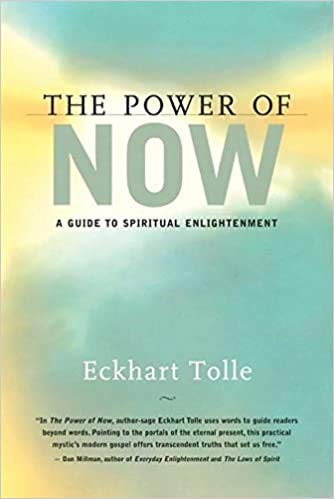
Hey everyone! Ian here! Welcome to our book review of The Power of Now by Eckhart Tolle. First published in nineteen ninety-seven, this slim spiritual classic has a blunt claim that still lands hard: almost all of your suffering is not in your life. It is in your mind. And the exit door is not a better plan, a better future, or a better story about yourself. It is this moment. Right now.

Tolle Night Of Collapse

Tolle was born Ulrich Leonard Tölle in Germany in nineteen forty-eight. He studied in London and at Cambridge, then spent years in what he later called almost continuous anxiety, broken by suicidal depression. One night near his twenty-ninth birthday, the thought “I cannot live with myself any longer” cracked open. He noticed the split between the “I” and the “self” it could not live with, and something in him dropped the unhappy identity.

Tolle Night Of Collapse
Park Benches To Bestseller

Park Benches To Bestseller

What followed, he writes, was months of deep peace, then years of a quieter presence, including nearly two years sitting on park benches in intense joy with almost no conventional identity left. In nineteen ninety-five he moved to Vancouver. In nineteen ninety-seven Namaste Publishing released The Power of Now. New World Library scaled it in nineteen ninety-nine. After Oprah Winfrey recommended it, the book hit the New York Times bestseller list and went on to be translated into dozens of languages. Tolle later followed it with A New Earth.

Spoiler Warning Ahead

Fair warning before we go deeper: this is not a plot novel, but I am going to walk the full argument, exercises and all. Spoilers ahead for the book’s core teaching.

Spoiler Warning Ahead
You Are Not Mind

You Are Not Mind

The Power of Now is structured as a spiritual manual in question-and-answer form. Tolle says he is not inventing a new religion. He is restating what he calls the one timeless spiritual teaching at the heart of the great traditions, in language modern readers can use. The book’s central diagnosis is simple and uncomfortable. You believe you are your mind. You are not. The voice in your head narrates, judges, worries, and rehearses. When you are fully identified with that voice, thought becomes compulsive. You cannot stop.

Ego Feeds On Time

That compulsion creates a phantom self, the ego, built from memory, roles, possessions, opinions, and fears. The ego feels incomplete, so it feeds on the past and hungers for a future in which it will finally be enough. Meanwhile the only place life actually happens, the Now, is barely inhabited.

Ego Feeds On Time
Clock Versus Psychological Time

Clock Versus Psychological Time

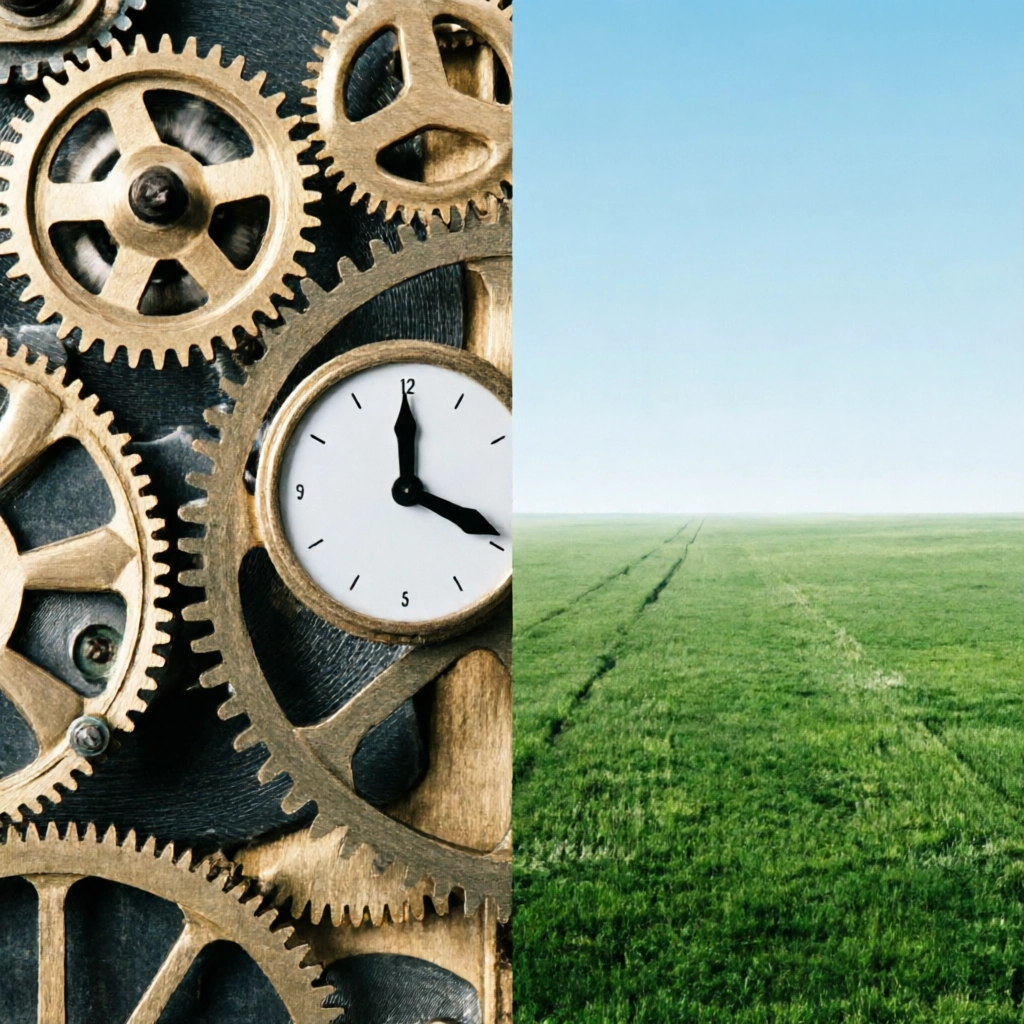
Tolle draws a sharp line between clock time and psychological time. Clock time is practical. You need it to catch a train, cook dinner, learn from yesterday, and set a goal. Psychological time is different. It is living as if the past defines you or the future will save you. Regret, resentment, anxiety, and endless waiting all pull attention out of the only moment that is real. He puts it plainly: you cannot suffer from the past or the future as actual places, because they do not exist as lived reality.

Watch The Thinker

What hurts is memory and imagination running unchecked while presence is missing. So how do you get free? First, watch the thinker. Do not fight thoughts. Observe them. The moment you notice the voice, there is a gap: you are the awareness behind the thought, not the thought itself. Second, watch emotions the same way. Feelings often lag behind mental stories; they are the body’s response to what the mind is telling itself. Presence means feeling the emotion fully in the body without spinning a fresh narrative on top of it.

Watch The Thinker
Dissolving The Pain Body

Dissolving The Pain Body

Third, Tolle introduces the pain-body: accumulated emotional pain that can go dormant, then flare when triggered, feeding on drama and identification. When you bring alert attention to the pain-body without becoming it, it loses fuel. Consciousness dissolves what unconsciousness keeps alive.

Inner Body Portals

Another major thread is the inner body. Instead of living only in the head, you drop attention into the aliveness of the physical body, the subtle sense of energy and presence within. That practice anchors you in the Now faster than arguing with thoughts. From there Tolle talks about portals into what he calls Being, the Unmanifested, Source, God, presence — he uses sacred language from multiple traditions without demanding you pick a tribe. Stillness, space, surrender, and intense present-moment attention are all doors.

Inner Body Portals
Mind As Tool Again

Mind As Tool Again

Enlightenment, in his framing, is not a trophy for the ego. It is rising above compulsive thought so the mind becomes a tool again instead of a master. You still think. You just are not owned by thinking.

Presence In Relationship

Relationships get a hard look too. When two people meet mainly as egos, they use each other to complete a lack that cannot be completed from outside. Presence changes the field. You stop demanding that another person fix your sense of self. Acceptance is not passivity. Tolle’s surrender means saying yes to what is in this moment so you stop the inner war. From that non-resistance, intelligent action can arise — action that is clean rather than frantic. He also distinguishes your life situation from your life. You can improve circumstances.

Presence In Relationship
Life Versus Life Situation

Life Versus Life Situation

You cannot “improve” the deeper fact of Being, because it is already whole. Outer purpose without inner purpose keeps the hamster wheel spinning.

Quotes That Cut Clean

A few lines capture the book’s spine. “Realize deeply that the present moment is all you ever have.” “You are not your mind.” “The primary cause of unhappiness is never the situation but your thoughts about it.” “Whatever the present moment contains, accept it as if you had chosen it.” And the personal hinge of his own story: “I cannot live with myself any longer” — the sentence that revealed the false self. Critics sometimes call the prose repetitive or soft on structure, and some readers bounce off the metaphysical vocabulary. Fair enough.

Quotes That Cut Clean
Practice Not Theory

Practice Not Theory

The book is not a peer-reviewed psychology text. It is a practice manual written from one man’s rupture into presence, and it asks you to test the claims in your own attention, not just agree with them on a page.

Why It Still Matters

Why does this still deserve your time? Because the disease it names is ordinary. Phone in hand, mind in three timelines, body nowhere. You do not need to become a monk to benefit. Even five honest minutes of watching the thinker, feeling the inner body, or dropping psychological time can change the texture of a day. Ideal readers are people exhausted by rumination, high achievers who cannot feel success, anyone stuck in anxiety loops, and seekers who want the common core of spiritual teaching without joining a club.

Why It Still Matters
Come Back To Now

Come Back To Now

I keep coming back to this one when my own mind starts writing catastrophe novels about tomorrow — it is the book that reminds me the emergency is often just unobserved thought. If you have been living mostly in your head, The Power of Now is a clear, insistent invitation back into the only moment that is actually here. Read it slowly. Practice the pauses. Let the questions work on you between chapters. Thanks for watching, and happy reading!

📚 You Might Also Like
The Four Agreements

The Four Agreements

Don Miguel Ruiz

Toltec wisdom for freeing yourself from mental agreements that create suffering

Read Review
The Monk Who Sold His Ferrari

The Monk Who Sold His Ferrari

Robin Sharma

A fable about leaving hustle behind for inner mastery and present-moment living

Read Review
Siddhartha

Siddhartha

Hermann Hesse

A fictional journey toward awakening that lands in the same river of presence

Read Review
The Alchemist

The Alchemist

Paulo Coelho

A parable about listening past fear and living the treasure already under your feet

Read Review

💬 Reader Thoughts

Email is required for anti-spam but can be fake if you prefer privacy.

Loading comments...