← Back to Gallery
0 / 16
0:00 / 5:31
The Catcher In The Rye

The Catcher In The Rye

Book Review

Welcome To The Book Review

Welcome To The Book Review

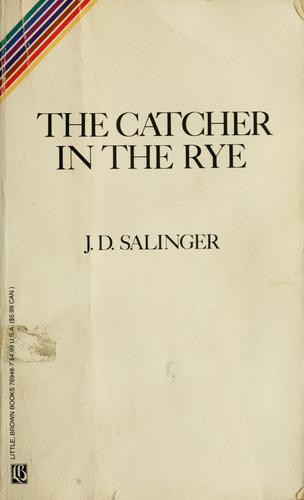
Hey everyone! Ian here! Welcome to our book review. Today we’re diving into a novel that has become a touchstone for generations of readers: J.D. Salinger’s The Catcher in the Rye. I first encountered this book in grade 11 high school, and honestly, it’s one that’s stuck with me ever since. Its raw voice and timeless themes of alienation and authenticity still resonate, making it a must‑read even today.

Meet J.D. Salinger Author

Now, a little about the author and the book’s context. Jerome David Salinger, known as J.D. Salinger, was born in 1919 in New York City. He served in World War II, an experience that deeply influenced his writing. After the war, he published short stories in prestigious magazines like The New Yorker, and in 1951 he released his only novel, The Catcher in the Rye, through Little, Brown and Company. The book was an immediate success, though also controversial for its frank language and portrayal of teenage angst.
Meet J.D. Salinger Author
A Literary Phenomenon

A Literary Phenomenon

Over the decades it has sold over 65 million copies worldwide and remains a staple in literature classrooms, despite frequent challenges and bans.

Holden's New York Journey

Let’s talk about the story. The Catcher in the Rye follows Holden Caulfield, a sixteen‑year‑old who has just been expelled from his prep school, Pencey Academy. Instead of heading home right away, Holden decides to spend a few days wandering around New York City before facing his parents. Over those days we see his interactions with former classmates, teachers, strangers, and his beloved younger sister Phoebe. Holden is constantly troubled by what he calls “phoniness” – the hypocrisy and superficiality he sees in adults and even his peers.

Holden's New York Journey
Protecting Childhood Innocence

Protecting Childhood Innocence

He longs to protect innocence, imagining himself as the “catcher in the rye,” saving children from falling off a cliff into the corrupt adult world. His journey is both a physical trek through the city and an internal struggle with grief, loneliness, and the fear of growing up. Along the way he grapples with the death of his younger brother Allie, whose memory haunts him, and he seeks genuine human connection in a world he perceives as artificial.

Exploring The Book's Themes

Now, let’s break down the key points and the book’s central goals. Salinger wanted to capture the authentic voice of adolescent angst and critique the post‑war American obsession with conformity. He succeeded spectacularly through Holden’s first‑person narrative, which feels immediate and intimate. Here are five core ideas that emerge:

Exploring The Book's Themes
Struggle For Authenticity

Struggle For Authenticity

First, the struggle with identity and authenticity. Holden constantly questions who he is and despises anything that feels fake. As he says, “I’m always saying ‘Glad to’ve met you’ to somebody I’m not at all glad I met. If you want to stay alive, you have to say that stuff, though.” This quote highlights the tension between social politeness and true feeling.

Coping With Brother's Loss

Second, the pain of loss and grief. Allie’s death is a wound that never fully heals for Holden. He carries Allie’s baseball mitt, covered in poems, as a talisman of purity. He tells us, “I slept in the garage the night he died, and I broke all the goddam windows with my fist, just for the hell of it.” This raw outburst shows how grief can manifest as anger and confusion.

Coping With Brother's Loss
Dream Of Saving Children

Dream Of Saving Children

Third, the desire to protect innocence. Holden’s fantasy of being the catcher in the rye reveals his wish to shield children from the harsh realities of adulthood. He explains it to Phoebe: “I keep picturing all these little kids playing some game in this big field of rye and all. Thousands of little kids, and nobody’s around – nobody big, I mean – except me. And I’m standing on the edge of some crazy cliff.

The Catcher's Cliff

What I have to do, I have to catch everybody if they start to go over the cliff.” This metaphor underscores his protective instinct and his fear of corruption.

The Catcher's Cliff
Seeing Through Social Fakeness

Seeing Through Social Fakeness

Fourth, the critique of societal phoniness. Holden’s disdain for “phoniness” extends to movies, parties, and even his own brother D.B., who he feels sold out to Hollywood. He notes, “People never notice anything,” capturing his belief that most people go through life oblivious to genuine experience.

Longing For Human Connection

Fifth, the search for connection. Despite his cynicism, Holden reaches out repeatedly – calling a former girlfriend, visiting a former teacher, sneaking home to see Phoebe. His happiest moment in the novel is watching Phoebe ride the carousel in Central Park, where he feels “so damn happy” he’s afraid he might disappear. This shows that authentic joy, however fleeting, is possible.

Longing For Human Connection
Why This Book Matters

Why This Book Matters

Why does this book deserve your time today? Even though it was published over seventy years ago, its themes remain incredibly relevant. Adolescents and adults alike still grapple with questions of identity, authenticity, and belonging in a world that often feels superficial. Salinger’s masterful use of voice – raw, colloquial, and deeply personal – invites readers into Holden’s mind in a way few novels achieve.

Finding Your Authentic Path

If you’ve ever felt out of place, questioned the sincerity of those around you, or struggled to find your path, Holden’s journey will speak to you. It’s a reminder that it’s okay to be sensitive, to cherish innocence, and to seek genuine connection.

Finding Your Authentic Path
Join The Conversation Below

Join The Conversation Below

To wrap up, The Catcher in the Rye is more than just a classic; it’s a living conversation about growing up, staying true to oneself, and finding beauty in a flawed world. I encourage you to pick it up – or revisit it – and see what Holden’s story means to you now. Thanks for watching, and happy reading!

📚 Similar Books You Might Enjoy

1984
George Orwell
The Innovators
Walter Isaacson
On the Move
Oliver Sacks

Explore more books in the full gallery

💬 Reader Thoughts

Email is required for anti-spam but can be fake if you prefer privacy.

Loading comments...