← Back to Gallery
0 / 15
0:00 / 5:47
Lord Of The Flies

Lord Of The Flies

Book Review

Welcome To The Book Review

Welcome To The Book Review

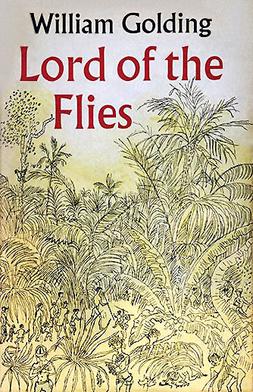
Hey everyone! Ian here! Welcome to our book review. Today we’re diving into a novel that has become a cornerstone of modern literature: William Golding’s Lord of the Flies. This is one of those books that many of us encounter in school – I remember reading it in high school and being struck by how powerful and disturbing it remains decades after its publication.

Meet William Golding Author

Now, a little about the author and the book’s context. William Golding was born in 1911 in Cornwall, England. He served in the Royal Navy during World War II, an experience that profoundly shaped his view of human nature. After the war, he worked as a teacher, and it was during this time that he began writing Lord of the Flies. The novel was rejected by numerous publishers before finally being accepted by Faber and Faber in 1954.

Meet William Golding Author
A Controversial Classic

A Controversial Classic

Despite a slow start, it has since become one of the most widely read and taught novels of the 20th century, with over 25 million copies sold worldwide.

Boys Stranded On Island

Let’s talk about the story. Lord of the Flies follows a group of British schoolboys who are stranded on an uninhabited island after their plane crashes during a wartime evacuation. With no adults surviving, the boys are left to govern themselves. Initially, they attempt to establish order, electing Ralph as their leader and establishing rules centered around maintaining a signal fire to attract rescue. However, as time passes and the hope of rescue fades, the boys gradually descend into savagery.

Boys Stranded On Island
Civilization Vs Savagery

Civilization Vs Savagery

The charismatic but ruthless Jack challenges Ralph’s leadership, forming his own tribe focused on hunting and ritual. The boys’ fear of a imagined “beast” on the island escalates, leading to tragic mistakes and eventually murder. The novel culminates in a violent confrontation that is only interrupted by the arrival of a naval officer, who finds the boys painted and armed, ready to kill each other.

Exploring The Book's Themes

Now, let’s break down the key points and the book’s central goals. Golding wrote Lord of the Flies as a response to the optimism of earlier adventure stories like The Coral Island, aiming to show that without societal constraints, humans are capable of great evil. He wanted to explore the defects of society by tracing them back to the defects of human nature. Here are five core ideas that emerge:

Exploring The Book's Themes
The Struggle For Order

The Struggle For Order

First, the conflict between civilization and savagery. The boys’ struggle to maintain order versus their descent into chaos represents Golding’s belief that civilization is a thin veneer over our innate capacity for violence. As he shows us, “Maybe there is a beast… maybe it’s only us.” This quote highlights the novel’s central insight that the true monster lies within each of us.

Fear Of The Unknown Beast

Second, the loss of innocence. The boys begin as well-mannered schoolchildren but end as violent hunters who have participated in torture and murder. Golding tells us that the theme is “an attempt to trace the defects of society back to the defects of human nature.” The transformation from civilized boys to savage hunters illustrates how quickly innocence can be lost when societal structures collapse.

Fear Of The Unknown Beast
Loss Of Innocence

Loss Of Innocence

Third, the nature of leadership and power. Through the contrasting leadership styles of Ralph (who values rules, cooperation, and rescue) and Jack (who values power, control, and immediate gratification), Golding explores different models of authority. Ralph’s leadership is democratic and focused on the common good, while Jack’s is authoritarian and based on fear and intimidation. The novel suggests that without strong institutions, charismatic but dangerous leaders can rise to power.
Leadership And Power Struggle

Fourth, the role of fear and superstition. The boys’ fear of the “beast” drives much of their irrational behavior. What begins as a misunderstanding about a dead parachutist evolves into a full-blown cult-like ritual involving sacrifice and dance. Golding shows how fear can be manipulated by those in power to control others, as Jack uses the beast to strengthen his own authority and justify violence.

Leadership And Power Struggle
The Role Of Reason

The Role Of Reason

Fifth, the importance of reason and empathy. Characters like Piggy and Simon represent the voice of reason and compassion in the story. Piggy, with his glasses (symbolizing technology and intellect) and his insistence on rules, tries to maintain a rational approach to survival. Simon, with his spiritual sensitivity and kindness, seeks to understand the truth about the beast. Both are ultimately sacrificed, suggesting that in a world dominated by fear and violence, reason and compassion are often the first casualties.

The Tragic Climax

Why does this book deserve your time today? Even though it was published seventy years ago, Lord of the Flies remains incredibly relevant. Its exploration of group dynamics, tribalism, and how quickly social order can break down speaks directly to modern experiences of political polarization, online mob behavior, and societal fragmentation. Golding’s unflinching look at the darkness within human nature serves as a warning about what happens when we abandon empathy, reason, and our shared humanity.

The Tragic Climax
Why This Book Matters

Why This Book Matters

The novel’s power lies in its accessibility – it’s a gripping adventure story on the surface, but beneath that lies a profound philosophical inquiry that rewards repeated reading. Whether you’re encountering it for the first time or revisiting it after years, Lord of the Flies challenges you to ask difficult questions about yourself and the society you live in.

Lessons For Today's World

To wrap up, Lord of the Flies is more than just a classic novel; it’s a mirror held up to human nature that continues to provoke and disturb readers around the world. I encourage you to pick it up – or revisit it – and see what its message means to you in today’s world. Thanks for watching, and happy reading!

Lessons For Today's World

💬 Reader Thoughts

Email is required for anti-spam but can be fake if you prefer privacy.

Loading comments...