Book Review

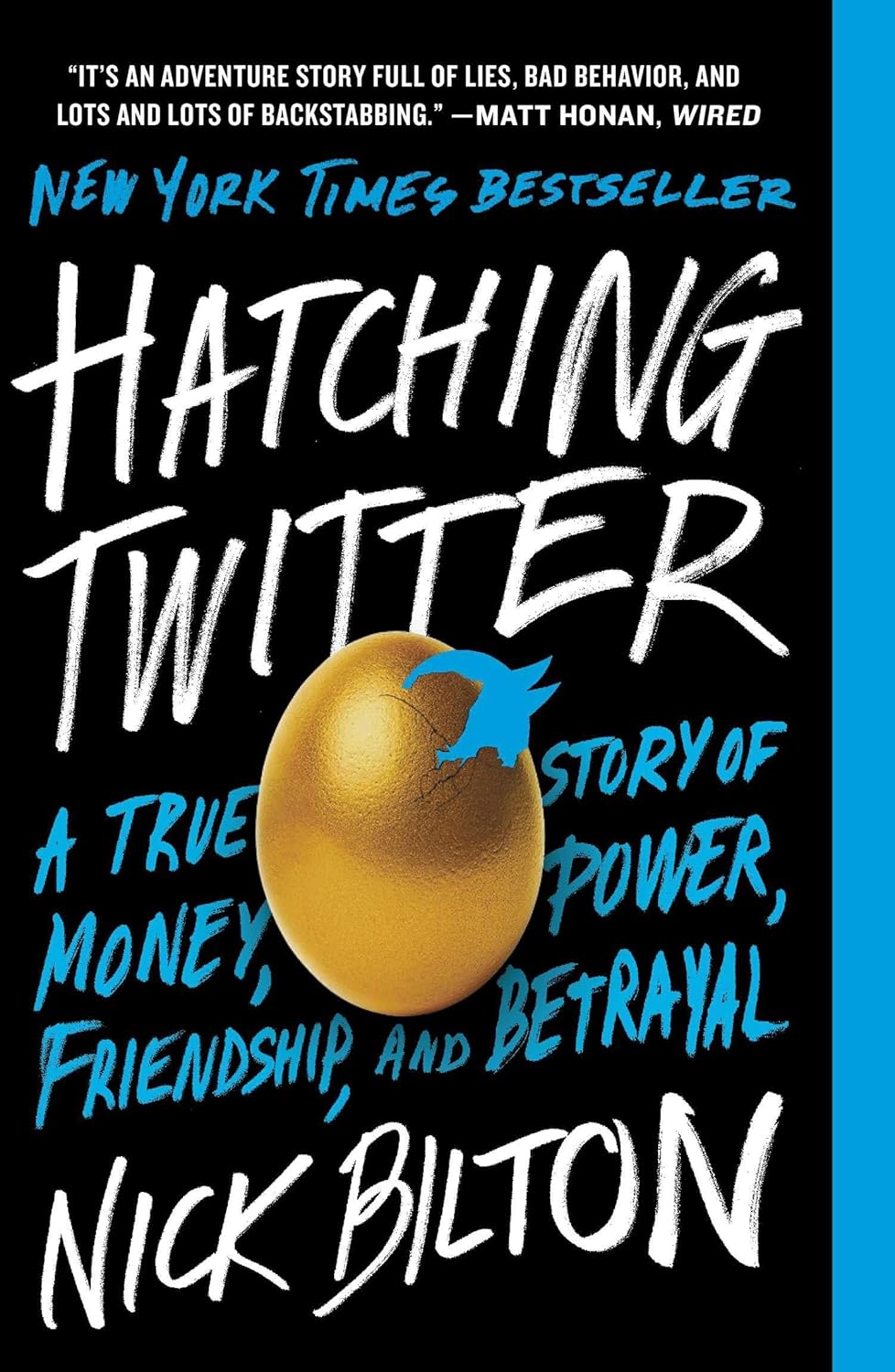
Hey everyone! Ian here. Welcome to our book review. Today we're diving into one of the most dramatic startup stories ever told. It's a tale of four friends who created something that changed how the world communicates, then destroyed each other fighting over who should run it. It's Hatching Twitter: A True Story of Money, Power, Friendship, and Betrayal by Nick Bilton.
This book was published in 2013 by Portfolio, and it's based on hundreds of interviews, thousands of documents, and unprecedented access to Twitter's early employees and founders. Nick Bilton is a technology reporter for The New York Times, and he spent years piecing together this story.


The book follows four main characters: Jack Dorsey, the awkward programmer who claimed to be Twitter's sole founder. Ev Williams, the Serial entrepreneur who actually funded and protected the company. Biz Stone, the charismatic wordsmith who gave Twitter its voice. And Noah Glass, the forgotten co-founder who was forced out before the company even launched.
Here's the story in a nutshell. In 2006, Noah Glass was running a struggling podcasting company called Odeo. When Apple announced iTunes would include podcasts, Odeo's entire business model collapsed overnight. Desperate to save the company, Noah created a side project with Jack Dorsey and a small team. It was originally called Stat.us, then Twttr and finally Twitter.


Spoiler warning: I'm going to reveal some major plot points here. At the 11th hour before launch, Jack Dorsey betrayed Noah Glass. Jack convinced Ev Williams, who was Odeo's CEO and primary investor, to push Noah out completely. Noah was fired, stripped of co-founder status, and written out of Twitter's history.
Then came the power struggle between Jack and Ev. Jack became Twitter's first CEO but he was a disaster. He lied about having management experience, showed up late constantly, took mysterious vacations, and alienated staff with his erratic behavior. After eighteen months, Ev and the board fired Jack.


But this is where it gets really twisted. Jack spent years plotting his revenge. He befriended powerful board members behind Ev's back, manipulated media narratives, and eventually convinced the board that Ev was the problem. In 2010, Ev was pushed out as CEO. Jack had won. The book delivers several powerful lessons about power and ambition.
First, as one early employee said: "Jack is the greatest salesman I've ever met. He sold the idea that he created Twitter when he didn't. He sold the board that Ev was incompetent when he wasn't. He sold the world on Twitter, and then sold the world on himself." Second, the book shows how startup culture's cult of the founder can create monsters. Twitter's early investors kept looking for a single hero despite it being a genuine collaboration. This forced Jack to destroy Noah, and eventually himself, to maintain that fantasy.


Third, Twitter's chaotic early years nearly destroyed the company repeatedly. The Fail Whale became famous because the platform couldn't handle its own success. Engineers worked around the clock to keep it running while executives fought petty political wars.
Finally, the book reveals how fragile friendship is when billions of dollars enter the equation. Noah, Jack, Ev and Biz were genuinely friends at the start. They partied together, dreamed together, built something incredible together. But Twitter became a five billion dollar company, and that money poisoned everything. **Spoiler warning continues** Why does this book deserve your time?


This isn't just another Silicon Valley story. It's Shakespearean tragedy played out in hoodies and jeans. Nick Bilton's reporting is relentless. He reconstructs scenes from emails, text messages, and court documents that show these aren't caricatures. These are brilliant, flawed human beings who did terrible things because ambition and insecurity are a deadly combination.
The writing moves like a thriller. You know how it ends, starting with Jack eventually returning as CEO and becoming one of tech's most recognizable figures. But Bilton makes you forget you know. The boardroom battles have you turning pages. The betrayals genuinely hurt because he makes you care about these people.


Critics called this book the definitive account of Twitter's founding, and even Twitter's current executives couldn't dismiss Bilton's reporting despite hating what it revealed about them. The book became a bestseller and was optioned for film adaptation because the story is that compelling. If you've ever wondered what really happens inside startups, this is your answer. Not the polished press releases and TED talks. The real story is messy, ugly, and more human than any outsider would guess.
Do yourself a favor. Go read Hatching Twitter. Then watch how you view the tech industry differently. Because behind every app that changes the world, there's a story like this one. Human ambition meeting human weakness, and something amazing surviving despite everything. That's our review for today. Thanks for watching. Until next time, keep reading.

Walter Isaacson
Another Isaacson tech history covering the digital revolution's pioneers
Read Review

Saifedean Ammous
Explores the money systems that power tech fortunes
Read Review