← Back to Gallery
0 / 15
0:00 / 5:17
To Kill A Mockingbird

To Kill A Mockingbird

Book Review

Hey everyone! Ian here. Welcome...

Hey everyone! Ian here. Welcome...

Hey everyone! Ian here. Welcome back to our must-read book review series. Today we’re talking about a novel that somehow feels both like a warm Southern childhood memory and a gut-punch lesson in courage and decency. If you’ve ever wondered what real moral bravery looks like when the whole town is against you, or how a child’s innocent eyes can expose adult hypocrisy, this book will stay with you for the rest of your life.

It’s Harper Lee’s To Kill...

It’s Harper Lee’s To Kill a Mockingbird.The author is Harper Lee—full name Nelle Harper Lee—born in 1926 in the tiny town of Monroeville, Alabama. Her father was a lawyer who once defended two Black men accused of murder, and her childhood friend Truman Capote inspired the character Dill. Lee studied law at the University of Alabama but left for New York to pursue writing. After years of struggle, she published this, her first (and only) novel, on July 11, 1960, with J. B. Lippincott.
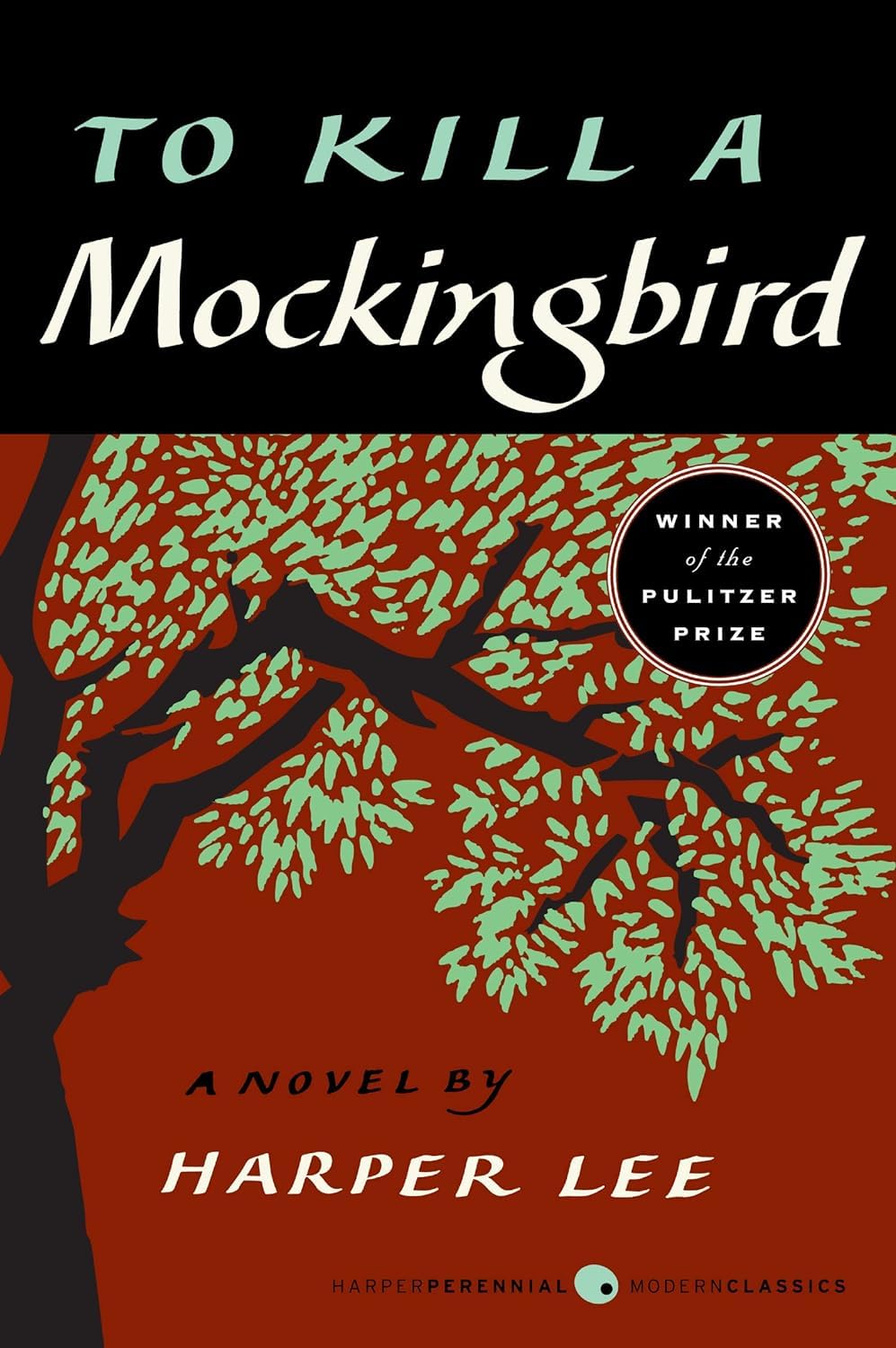
It’s Harper Lee’s To Kill...
At around 281 pages, it’s...

At around 281 pages, it’s...

At around 281 pages, it’s a Southern Gothic coming-of-age story set in the fictional town of Maycomb, Alabama, during the Great Depression. It won the Pulitzer Prize for Fiction in 1961, has sold more than forty million copies worldwide, and became an instant classic. The 1962 film adaptation starring Gregory Peck as Atticus Finch is still considered one of the greatest ever made. Goodreads sits at a strong 4.26 average from millions of readers who call it powerful, moving, and essential.Now let’s walk through the story spoiler-free.

The novel is narrated by...

The novel is narrated by Jean Louise “Scout” Finch, looking back on three pivotal years of her childhood in the early 1930s. Six-year-old Scout lives in Maycomb with her older brother Jem and their widowed father, Atticus Finch, a respected lawyer who treats everyone with quiet dignity.

The novel is narrated by...
Their days are filled with...

Their days are filled with...

Their days are filled with the kind of small-town adventures kids dream of—playing outside until the streetlights come on, inventing games, and obsessing over the mysterious, reclusive neighbor known only as Boo Radley, whose shuttered house becomes the source of endless spooky rumors and childhood dares.Everything changes when Atticus agrees to defend Tom Robinson, a Black man falsely accused of a terrible crime against a white woman.

The trial becomes the center...

The trial becomes the center of the town’s attention, exposing deep-seated racial prejudice that most of Maycomb would rather ignore. Through Scout’s young but fiercely observant eyes, we watch the adults around her react—with fear, anger, kindness, and cowardice. We see how the children slowly lose some of their innocence as they confront the ugliness of racism, class division, and the gap between what people say and what they actually do.

The trial becomes the center...
Lee weaves in the quiet...

Lee weaves in the quiet...

Lee weaves in the quiet, everyday lessons Atticus teaches his kids about empathy, standing up for what’s right even when it’s unpopular, and the simple truth that some people just need protecting.So what are the five or six biggest ideas that make this book a masterpiece? First, empathy is everything.

As Atticus tells Scout: “You...

As Atticus tells Scout: “You never really understand a person until you consider things from his point of view… until you climb into his skin and walk around in it.” Second, true courage isn’t a man with a gun—it’s doing the right thing when you know you’re going to lose. Third, innocence is fragile and precious; the “mockingbird” symbol runs through the whole story as a reminder not to destroy what only brings beauty into the world.

As Atticus tells Scout: “You...
As Miss Maudie explains: “Mockingbirds...

As Miss Maudie explains: “Mockingbirds...

As Miss Maudie explains: “Mockingbirds don’t do one thing except make music for us to enjoy… that’s why it’s a sin to kill a mockingbird.” Fourth, racism poisons everything it touches, but it also reveals the quiet heroes who refuse to go along with it. Fifth, children often see moral truths more clearly than adults because they haven’t yet learned to make excuses.

And sixth, as Scout reflects...

And sixth, as Scout reflects near the end: “Atticus was right… you never really know a man until you stand in his shoes and walk around in them.” Lee’s central goal was to show the moral cost of prejudice while celebrating the quiet decency that can still exist even in the darkest times.

And sixth, as Scout reflects...
She achieved it so powerfully...

She achieved it so powerfully...

She achieved it so powerfully that the book became required reading in schools across America.Some might say a 1960 novel set in the 1930s feels distant from today, but here’s the honest truth: the core struggles—empathy versus prejudice, courage versus conformity, innocence versus harsh reality—haven’t gone away.

They just wear different clothes...

They just wear different clothes in every generation.This book deserves your time because it’s beautifully written, emotionally honest, and still one of the most effective ways to teach young people (and remind the rest of us) about decency in the face of injustice.

They just wear different clothes...
Whether you’re a teenager discovering...

Whether you’re a teenager discovering...

Whether you’re a teenager discovering it for the first time, a parent reading it with your kids, or an adult revisiting it decades later, To Kill a Mockingbird will make you laugh, cry, and think harder about how you treat the people around you.There you have it—To Kill a Mockingbird by Harper Lee. Grab a copy, read it slowly, and let it work on you. Drop a comment below: which character or moment from the book has stayed with you the most? And make sure to subscribe so you never miss our next must-read review.

Thanks for watching, everyone—I’ll see...

Thanks for watching, everyone—I’ll see you in the next one!

Thanks for watching, everyone—I’ll see...

💬 Reader Thoughts

Email is required for anti-spam but can be fake if you prefer privacy.

Loading comments...