The Gene Editing Revolution
Today we're diving into a book that feels like it's straight out of a sci-fi thriller—except it's all real, happening right now, and it could rewrite the future of the human race. If you've ever wondered whether we'll one day edit out diseases like cancer, design healthier babies, or even tweak traits like intelligence, this book takes you inside the revolution that just made it possible. Let's meet the author.
Master Biographer
Walter Isaacson is the master biographer of our time—the guy who gave us definitive lives of Steve Jobs, Leonardo da Vinci, Albert Einstein, and Benjamin Franklin. Former CNN chairman and TIME editor, he has an uncanny knack for turning complex genius into gripping human drama. For this book, Isaacson had extraordinary access to his subject, shadowing her for years and weaving in the stories of dozens of other scientists.
Instant Bestseller
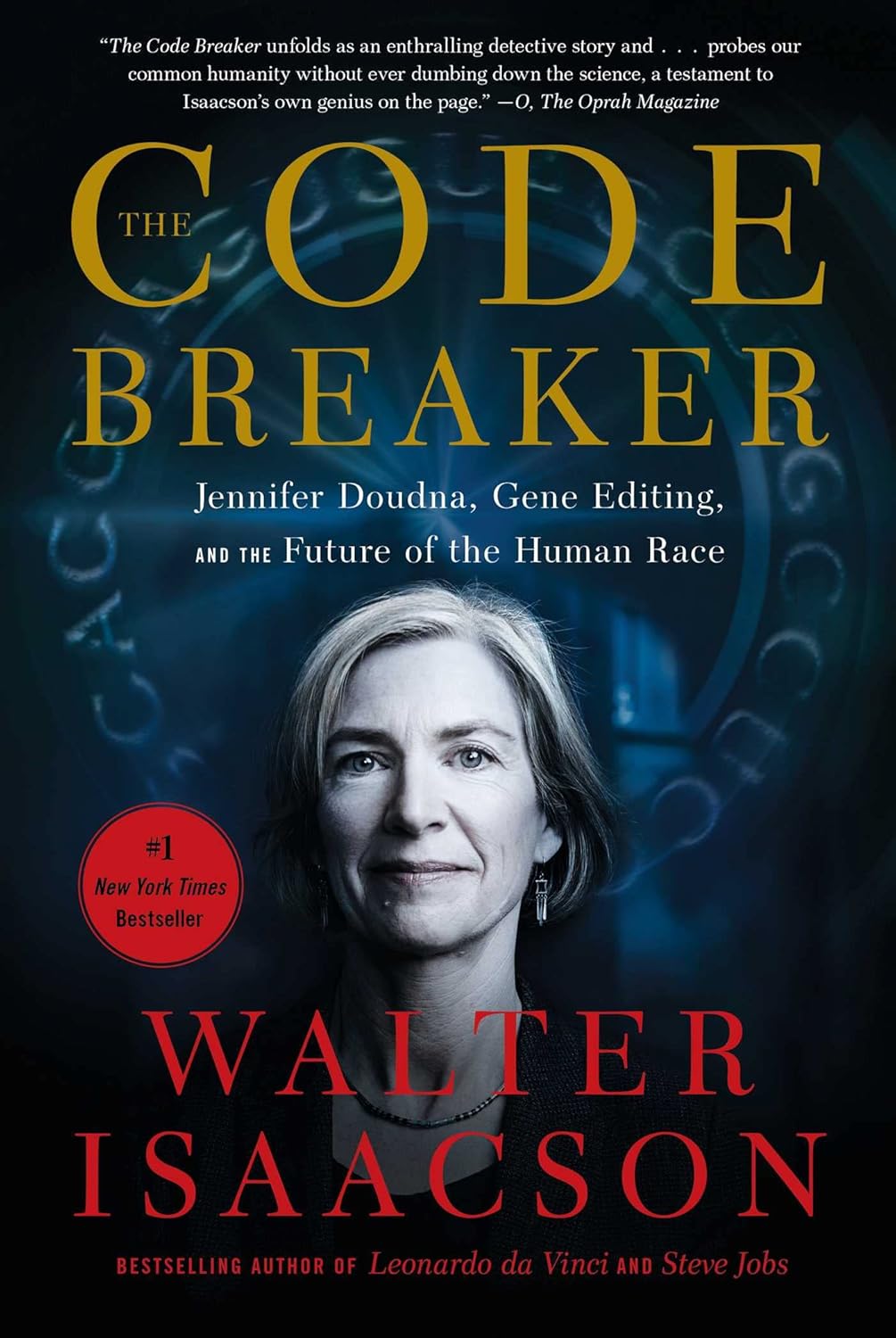
The Code Breaker: Jennifer Doudna, Gene Editing, and the Future of the Human Race was published on March 9, 2021, by Simon & Schuster. It's a substantial 536-to-560-page narrative that became an instant bestseller, won the 2021 BookBrowse Nonfiction Award, and was a Goodreads Choice Award nominee for Best History & Biography. On Goodreads it holds a strong 4.28 average from more than 41,000 ratings. Critics called it a "science page-turner," "gripping detective tale," and "thought-provoking," though some noted it balances personal biography with big ethical questions so well that it sometimes feels like two books in one. Either way, it's widely hailed as the definitive account of one of the most important scientific breakthroughs of the twenty-first century.
The Big Picture
Here's the big picture—completely spoiler-free, because the thrill is watching the discovery unfold in real time. The book opens with Jennifer Doudna as a curious kid in Hawaii, devouring The Double Helix and dreaming of cracking nature's secrets. You follow her journey from graduate school through the competitive world of RNA research, where she teams up with the brilliant French
CRISPR Discovery
scientist Emmanuelle Charpentier. Together they uncover something astonishing: a bacterial immune system called CRISPR-Cas9 that acts like molecular scissors, letting scientists
The Global Race
edit DNA with precision and ease. Isaacson takes us inside the high-stakes global race—labs in Berkeley, Europe, and beyond scrambling to turn this bacterial trick into a tool for humans. You feel the late-night experiments, the patent battles, the rivalries, and the sheer excitement as CRISPR goes from lab curiosity to a technology that can snip out genetic diseases, fight viruses, and raise profound questions about designer babies and human enhancement.
COVID-19 & Nobel Prize
The story accelerates when COVID-19 hits: the same mRNA techniques built on CRISPR insights help create vaccines at record speed. By the end, Isaacson shows how this one discovery—honored with the 2020 Nobel Prize in Chemistry for Doudna and Charpentier—ushers in what he calls the third great revolution of modern times, after the computer and the internet.
Collaboration & Competition
It's not just about one scientist; it's about collaboration, competition, and the moral tightrope we're now walking with the power to rewrite the code of life itself.
Six Essential Lessons
So what are the core ideas and lessons you'll walk away with? Here are the six biggest that make this book essential. First, CRISPR is the tool that democratizes gene editing: cheap, simple, and programmable, it turns biology into something we can engineer
Lessons Two & Three
rather than just observe. Second, science is a team sport—but driven by fiercely curious, stubborn, and competitive individuals. As Isaacson writes, "Science is a team sport. But I also want to show the impact that a persistent, sharply inquisitive, stubborn, and edgily competitive player can have." Third, the invention of CRISPR and the COVID pandemic together mark the start of the next great innovation revolution: one where biotechnology lets us control our own genetic future. Isaacson puts it powerfully: "The invention of CRISPR and the plague of COVID will hasten our transition to the third great revolution of modern times." Fourth, with great power comes great ethical
Lessons Four, Five & Six
responsibility—we now have the ability to cure diseases, fend off viruses, and even enhance human traits, but we must decide where to draw the line between therapy and enhancement. Doudna herself captures the tension: "We now have the power to control our genetic future, which is awesome and terrifying. So we must move forward cautiously and with respect for the power we've acquired." Fifth, curiosity—not money or glory—is the true driver of discovery. Isaacson notes, "All of the scientists I write about in this book say that their main motivation is not money, or even glory, but the chance to unlock the mysteries of nature." And sixth, history belongs to those who choose bold, unconventional paths. One of Doudna's guiding principles: "Never do something
Isaacson's Goal
that a thousand other people are doing." Isaacson's central goal was to make this complex science accessible, human, and urgent—so we can all join the conversation about how we'll use (or limit)
Why Read This Now?
this god-like power. He succeeds brilliantly. Why does this book deserve your time right now? Because gene editing isn't science fiction anymore—it's already in clinical trials, already helping treat sickle-cell disease, and already raising questions that will define the next century. In an era of rapid biotech breakthroughs, Isaacson gives you the full, balanced picture: the awe-inspiring promise, the real human drama behind the labs, and the sober ethical debates we can't afford to ignore.
The Writing
The writing is clear, vivid, and fast-paced, with color photos and explanations that make even the molecular details feel exciting. Perfect for students, science lovers, parents thinking about the world their kids will inherit, or anyone who wants to understand the technology that could cure cancer, fight pandemics, or reshape humanity. It's optimistic without being naïve, and it leaves you both
Essential Reading
inspired and thoughtful. There you have it—The Code Breaker, the book that shows how a group of determined scientists unlocked the code of life and handed us the keys to our genetic future. If you care about where medicine, ethics, and humanity are headed, grab a copy today; it might just be the most important book you read this year. Drop a comment below: would you edit your own genes or your kids'—and where would you draw the line? Hit like if this review got you thinking, subscribe so you never miss our next deep dive, and I'll see you in the next one. Stay curious, keep questioning, and remember: the code of life is no longer just something we read—it's something we can now write. Thanks for watching!
💬 Reader Thoughts
Loading comments...