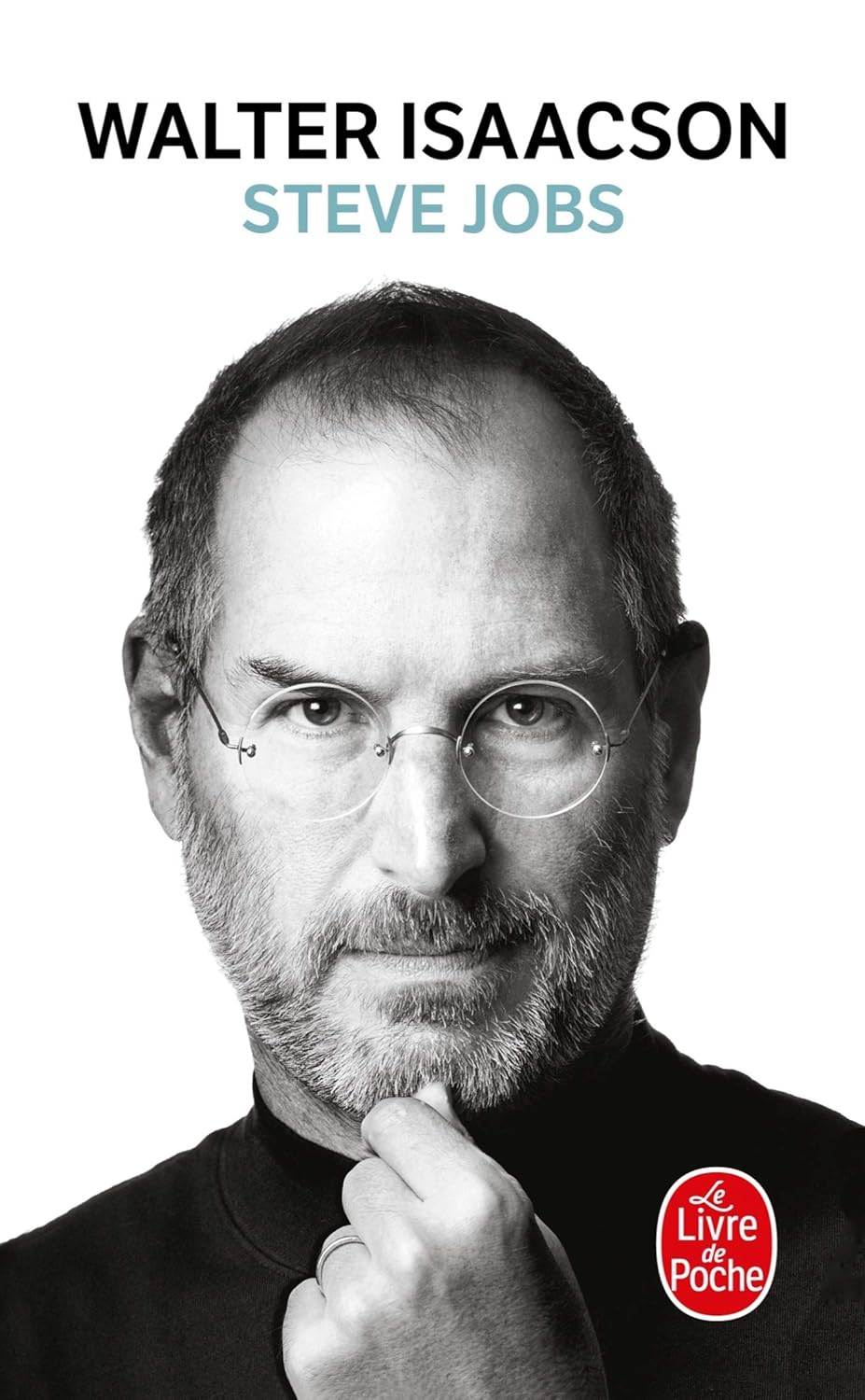
Walter Isaacson (2011)

Hey everyone! Ian here. Welcome to our must-read books review. Picture a college dropout who gets fired from the company he co-founded in his parents' garage, then comes roaring back to invent the iPod, the iPhone, and the iPad—products that didn't just sell; they reshaped how the entire planet listens, communicates, and creates. But behind the black turtleneck and the reality distortion field was a man who could be brutally demanding, deeply flawed, and ferociously driven.
That's the unfiltered Steve Jobs you meet in Walter Isaacson's authorized biography. If you've ever wondered how one person's passion, perfectionism, and occasional ruthlessness can change the world—and whether those same traits could spark something in you—stay with me. This isn't hero worship; it's the real story, warts and all.


Let's talk about the author. Walter Isaacson is the gold-standard biographer who gave us definitive lives of Benjamin Franklin, Albert Einstein, and later Leonardo da Vinci. A former Time magazine editor and CNN CEO, he was personally chosen by Steve Jobs in 2009 to write this book. Jobs gave him total access—more than forty interviews over two years, plus hundreds more with family, friends, rivals, and colleagues—and demanded no editorial control.
Published by Simon & Schuster on October 24, 2011—just nineteen days after Jobs' death—this 656-page epic became an instant phenomenon. It was Amazon's bestselling book of 2011, a Goodreads Choice Award winner for History & Biography, and sits at a strong 4.16 average from over a million ratings. Critics from the New York Times to The New Yorker hailed it as the biography of record: unflinching, riveting, and honest about both the genius and the demons.


Now, the full story. Isaacson takes us chronologically through Jobs' roller-coaster life, starting with his unconventional childhood. Born in 1955 and given up for adoption, he grew up in Silicon Valley with loving adoptive parents who supported his curiosity. At seventeen he dropped out of Reed College but stuck around to audit classes, including calligraphy that would later shape Apple's elegant fonts. In 1976 he teamed up with Steve Wozniak to found Apple in his parents' garage, launching the personal-computer revolution with the Apple II and then the groundbreaking Macintosh in 1984.
But success bred conflict. In 1985, after a boardroom power struggle, Jobs was pushed out. Devastated, he founded NeXT and bought Pixar, turning the struggling animation studio into an Oscar-winning powerhouse with Toy Story. In 1997 Apple was near death and bought NeXT—bringing Jobs back as interim CEO. What followed was an unbelievable second act: the colorful iMac, the iPod that put "a thousand songs in your pocket," iTunes, the iPhone in 2007, the App Store, and the iPad.


Along the way we see his Zen Buddhism, his strict vegan diets, his complicated family life, and his battles with pancreatic cancer that he first tried to treat with alternative medicine before surgery. The book ends with his final months, his reflections, and his death in 2011 at age fifty-six.
That brings us to the book's six big key points and Isaacson's central goal. First, the reality distortion field—Jobs' almost mystical ability to convince people that the impossible was inevitable. Isaacson shows how this force field fueled breakthroughs but also exhausted teams. Second, simplicity is the ultimate sophistication. Jobs obsessed over stripping away the unnecessary; he'd slash product lines to just four quadrants and demand designs that felt intuitively right.


Third, art and technology belong together. He believed "technology alone is not enough—it's technology married with liberal arts, married with the humanities, that yields us the results that make our heart sing." Fourth, follow your intuition and passion. "The only way to do great work is to love what you do," he said, and he lived it—dropping out, traveling to India, taking LSD for its mind-expanding effect.
Fifth, perfectionism is a double-edged sword. It produced breathtaking products but made him a notoriously difficult boss who could reduce colleagues to tears. And sixth, character and values matter as much as vision. Isaacson's goal was to paint an unflinching portrait of how Jobs' intense personality—his demons and his drive—were inseparable from his genius and the six industries he revolutionized. He nails it completely.


So why does this book deserve your time? It's brutally honest, page-turningly dramatic, and packed with lessons that still hit hard in 2026. Strengths? Isaacson balances jaw-dropping innovation stories with raw personal details—no sugar-coating the man who could be cruel yet inspiring. Ideal for entrepreneurs, creatives, tech lovers, or anyone wrestling with big ideas and tough leadership. Even if you're not an Apple fan, you'll walk away understanding how one person's refusal to accept "good enough" can reshape culture. In our AI-driven world, its message about blending creativity with technology feels more urgent than ever.
In the end, Steve Jobs isn't just a biography—it's a masterclass in vision, resilience, and the high cost of greatness. If you want to be inspired, challenged, and maybe a little uncomfortable while learning what it really takes to change the world, grab this book today. Hardcover, paperback, or the audiobook narrated with Jobs' own voice clips—any format will stick with you. Drop your favorite Steve Jobs moment or lesson in the comments, hit that like button if this fired you up, and subscribe for more must-read deep dives. Ian here—thanks for watching. Stay passionate, stay hungry. See you next time!