Book Review

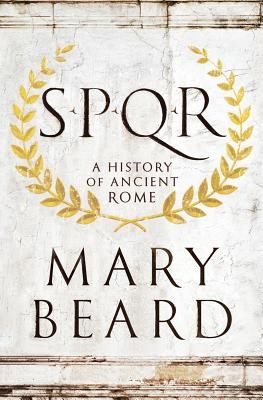
Hey everyone! Ian here. Welcome back to our must-read book review series. Today we are diving into a book that completely reshapes how you see one of history's most legendary civilizations. If you have ever thought ancient Rome was just emperors, legions, and marble statues, prepare to have your mind blown. This is Mary Beard's SPQR: A History of Ancient Rome.
Mary Beard is one of the world's foremost classical scholars. She has taught at Cambridge for decades, written dozens of books, and become something of a rock star in the world of ancient history. She brings a refreshingly modern, irreverent voice to a field that can sometimes feel dusty and inaccessible. With SPQR, she set out to do something ambitious: tell the story of Rome not from the top down, but from the ground up.


Published in 2015 by Liveright, SPQR is a substantial but fast-paced read at roughly 600 pages. It became an instant New York Times bestseller and won the Wolfson History Prize. The title comes from the Latin Senatus Populusque Romanus, meaning the Senate and People of Rome, the official signature of the Roman state. Beard uses it as a framing device to constantly ask: whose Rome are we actually talking about? The senators? The soldiers? The slaves? The women?
The book opens with a provocative question. Instead of asking why Rome fell, Beard asks how Rome rose in the first place, and why it lasted so long. She takes us from the mythical founding of Rome by Romulus and Remus, through the overthrow of the kings, the establishment of the Republic, the Punic Wars against Carthage, the rise of Julius Caesar, and the transformation into an empire under Augustus. But here is the twist: she does not just recount battles and political maneuvers. She reconstructs the lives of ordinary people.


We learn what it was like to be a Roman citizen voting in the Forum, a slave working in a wealthy household, a woman navigating legal restrictions, or a soldier stationed on the edge of the empire. Beard pulls off a remarkable feat. She makes you feel like you are walking the streets of ancient Rome, hearing the noise, smelling the smells, and understanding the anxieties and ambitions of people who lived two thousand years ago.
One of the book's greatest strengths is how Beard demolishes the myth of Rome as a perfectly organized, monolithic superpower. She shows us a city that was chaotic, argumentative, and deeply unequal. Roman politics was not a refined debate club; it was street theater, intimidation, and raw populism. Sound familiar? Beard draws subtle but powerful parallels between ancient Roman political theater and modern democracy without ever being preachy.


Another key theme is citizenship. Rome's genius, Beard argues, was not just its armies or its roads. It was its willingness to extend citizenship to defeated enemies, freed slaves, and people from across the Mediterranean. This radical inclusivity, however imperfect, created a multi-ethnic empire held together by shared legal rights. It was both Rome's greatest innovation and, eventually, one of its greatest strains.
Beard also tackles the question of sources with refreshing honesty. She constantly reminds us how little we truly know. Our picture of ancient Rome comes from a tiny fraction of surviving texts, mostly written by wealthy men. Beard does not pretend to certainty where there is none. She presents multiple interpretations, shows you the evidence, and invites you to think for yourself. It is history as detective work, and it is thrilling.


The writing is conversational, witty, and packed with memorable details. Did you know that Roman elites competed to build the most lavish tombs along the roads leading into the city? Or that the Roman Senate once debated whether women should be allowed to wear expensive clothing? Beard sprinkles these gems throughout, keeping even the longest chapters engaging.
Now, who is this book for? If you are a history buff, this is essential reading. If you are a casual reader curious about Rome, do not be intimidated by the page count. Beard writes with such clarity and energy that the pages fly by. If you are interested in politics, democracy, citizenship, or empire, there are insights here that feel urgently relevant to our own moment.


The audiobook, narrated by Beard herself, is also excellent. Her voice carries the same warmth and wit that infuses the text. But the printed version has the advantage of maps, illustrations, and timelines that help orient you. In the end, SPQR is not just a history book. It is an invitation to rethink what we mean when we say Rome. It challenges us to look past the emperors and generals and see the messy, human civilization underneath. Mary Beard has given us a masterpiece: rigorous, entertaining, and deeply humane.
If you have not read it yet, grab a copy today. Paperback, hardcover, or audiobook, any format works. Drop a comment below: what is your favorite era of Roman history? And subscribe so you do not miss our next deep dive. Thanks for watching, everyone. See you in the next one!