← Back to Gallery
0 / 12
0:00 / 5:26
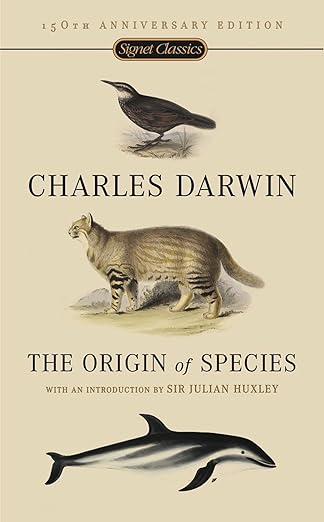
On the Origin of Species

On the Origin of Species

Charles Darwin (1859)

Welcome

Welcome

Hey everyone, Ian here. Welcome back to our book review. Today we're diving into what many consider the most important science book ever written, Charles Darwin's On the Origin of Species, published in 1859. This isn't just history, it's the foundation of modern biology and trust me whether you're into science or not. This book will change how you see the world.

Darwin's Journey

Charles Darwin was an English naturalist who after five years aboard HMS Beagle exploring South America, Australia and Africa, returned with observations that would overturn everything we thought we knew about life on Earth, published by John Murray in London on November 24th, 1859, Origin introduced the scientific theory that populations evolved over generations through natural selection.

HMS Beagle
Publication

Immediate Impact

At 500 and 2 pages, it was written for non-specialists and sold out its first print run of 1,250 copies on day one. By the 1870s, the scientific community had largely accepted evolution, though natural selection itself faced decades of debate.

Artificial Selection

Darwin organizes his argument across 14 chapters. He begins with what readers already know, artificial selection. Breeders have exploited variation in domestic animals for centuries. Darwin spends 10 pages on pigeons alone to show how selecting slight variations produces incredible diversity from a single wild species. This establishes that selection can modify species over time.

Pigeon Breeding
Galapagos Finches

Variation in Nature

In chapter two, he demonstrates that variation exists in wild populations. Individuals differ in size, color, behavior, and countless traits. These differences are the raw material for natural selection. He calls these variants incipient species, which can diverge further over generations.

Struggle for Existence

Chapter three introduces what Darwin called the struggle for existence. Following Thomas Malthus's insight that populations grow faster than food supply, Darwin explains that more offspring are born than can survive. Sexual reproduction could double populations each generation, but limited resources, predators, and environmental challenges create constant competition. Darwin writes, "We behold the face of nature bright with gladness. We often see super abundance of food. We do not see or we forget that the birds which are idly singing round us mostly live on insects or seeds and are thus constantly destroying life."

Struggle for Existence
Natural Selection

Natural Selection

Chapter four presents the mechanism, natural selection. Since individuals vary, those with useful variations survive and reproduce, passing advantages to offspring, Darwin defines it as this, preservation of favorable variations, and the rejection of injurious variations, I call natural selection. He notes that natural selection is daily and hourly scrutinizing throughout the world, every variation, even the slightest, rejecting that which is bad, preserving, and adding up all that is good.

Addressing Objections

Chapter five through nine address difficulties and objections. How do complex structures like the eye evolve? Darwin argues intermediate stages could still function, partial vision beats none. What about transitional fossils? He acknowledges gaps but attributes them to the incomplete fossil record. What about instincts? He shows they evolve like physical traits. Darwin anticipated his critics and addressed them systematically.

Eye Evolution
Comparative Anatomy

The Evidence

Chapter ten through 13 examined what natural selection explains. Geology, geography, taxonomy, morphology, and embryology. Darwin shows homologous structures, bat wings, whale flippers, human hands, share underlying bone structures pointing to common ancestry. Embryos of different species look remarkably similar, early in development, island species resemble mainland relatives.

Darwin's Achievements

Chapter 14 recapitulates the argument. Darwin achieved five major goals with this book. First, he established that evolution is fact, species descend from earlier ancestors. Second, he provided the mechanism. Natural selection preserves favorable variations and rejects injurious ones. Third, he demonstrated common ancestry through the Tree of Life some branches thrive, others wither, as Darwin wrote "from so simple of beginning endless forms most beautiful and most wonderful have been and are being evolved." Fourth, he replaced the idea of specially created fixed species with a dynamic interconnected web of life. Fifth, he grounded biology and natural laws rather than supernatural intervention.

Tree of Life
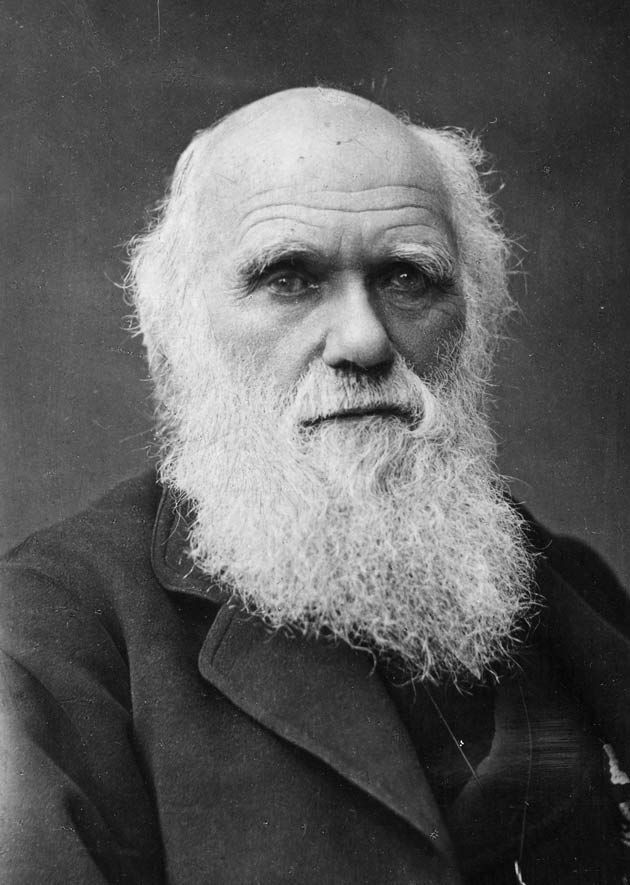
Charles Darwin Portrait

Why Read & Conclusion

Because origin of species is remarkably accessible. Darwin wrote for general readers not specialists. It demonstrates how scientific reasoning works, observation hypothesis, evidence, and revision. The book's themes, adaptation, competition, interconnectedness, remain relevant to understanding antibiotic resistance, climate adaptation, even human behavior. Modern evolutionary synthesis, genetics, DNA, all-build on foundations, Darwin laid. Darwin's Origin of Species didn't just change biology. It changed how humanity understands its place in nature. Whether you accept every implication or not, this book provides essential context for understanding life on earth. Thanks for watching and I'll catch you in the next review.