← Back to Gallery
0 / 27
0:00 / 10:26
One Hundred Years Of Solitude

One Hundred Years Of Solitude

Book Review

Hey everyone! Ian here! Welcome...

Hey everyone! Ian here! Welcome...

Hey everyone! Ian here! Welcome to our book review. Today we're exploring a novel that launched an entire literary movement, won its author the Nobel Prize, and is widely considered one of the greatest works of fiction ever written. I'm talking about One Hundred Years of Solitude by Gabriel Garcia Marquez, published in 1967. If you've ever wondered what magical realism really means, or why this book has captivated readers across every continent and language, you're in for a treat.

Gabriel Garcia Marquez was born...

Gabriel Garcia Marquez was born in 1927 in Aracataca, Colombia, a small tropical town that would become the direct inspiration for Macondo, the setting of this novel. He was raised largely by his grandparents. His grandfather, a retired colonel, told him stories about civil wars and ghosts. His grandmother treated the extraordinary as perfectly ordinary, a narrative stance that would define Garcia Marquez's entire career.

Gabriel Garcia Marquez was born...
He worked as a journalist...

He worked as a journalist...

He worked as a journalist before turning to fiction, and his earlier novels like No One Writes to the Colonel and In Evil Hour established him as a major Latin American writer. But One Hundred Years of Solitude, published in Buenos Aires by Editorial Sudamericana in 1967, changed everything. It sold out its first edition of eight thousand copies in less than a week. It has since been translated into forty-six languages and sold over fifty million copies.

Garcia Marquez won the Nobel...

Garcia Marquez won the Nobel Prize in Literature in 1982, and the Swedish Academy specifically cited this book as a masterpiece. It is the defining work of the Latin American Boom, the literary movement that put writers like Marquez, Julio Cortazar, Carlos Fuentes, and Mario Vargas Llosa on the world stage.

Garcia Marquez won the Nobel...
So what is this book...

So what is this book...

So what is this book about? Fair warning: I'm going to give you a comprehensive overview, and that necessarily means some spoilers, because the plot spans seven generations and folds back on itself in ways that are impossible to summarize without revealing major developments. The novel tells the story of the Buendia family and the town of Macondo, which they found in the middle of a swamp. The patriarch, Jose Arcadio Buendia, is a kind of tropical mad scientist, obsessed with discovering new inventions and alchemical secrets.

His wife, Ursula, is the...
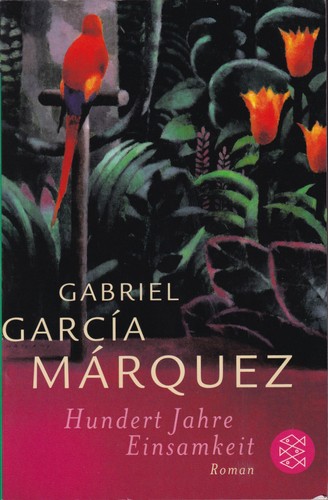
His wife, Ursula, is the moral and practical anchor of the family, living to an impossible age and trying desperately to keep the family from destroying itself. Their children and descendants include Colonel Aureliano Buendia, who launches thirty-two failed uprisings against the Conservative government and fathers seventeen sons by seventeen different women, all of them named Aureliano and all of them bearing the mark of ashes on their foreheads.

His wife, Ursula, is the...
There is Remedios the Beauty...

There is Remedios the Beauty...

There is Remedios the Beauty, so impossibly beautiful that she ascends bodily into heaven while hanging laundry. There is the insomnia plague that causes the entire town to lose their memories, forcing them to label every object in their houses. There are the three thousand workers massacred by the government at the banana plantation, whose bodies are loaded onto trains and dumped into the sea, an event that the official records later claim never happened.

There is Melquiades, the mysterious...

There is Melquiades, the mysterious gypsy who writes the prophecies in Sanskrit that predict the entire family's history, and whose room becomes a kind of sacred space where time does not pass normally. The novel moves through civil wars, economic booms and busts, love affairs both passionate and perverse, and a gradual spiral toward destruction.

There is Melquiades, the mysterious...
In the final pages, the...

In the final pages, the...

In the final pages, the last surviving Buendia, Aureliano Babilonia, deciphers Melquiades's prophecies and discovers that they are the very novel he is reading, and that the town of Macondo is about to be wiped from the face of the earth by a hurricane. The book ends with the devastating line that races, condemned to one hundred years of solitude, did not have a second opportunity on earth.

Now let's unpack what Garcia...

Now let's unpack what Garcia Marquez is really doing here. First, magical realism as a political and narrative strategy. This is not fantasy in the Tolkien sense. In Macondo, the magical is treated as utterly ordinary. When Remedios ascends to heaven, the narrator reports it as a simple fact. When blood flows uphill to find its source, nobody is particularly surprised. Garcia Marquez explained that his grandmother told these kinds of stories without any distinction between the real and the magical, and he adopted that same narrative stance.

Now let's unpack what Garcia...
But there's a deeper purpose...

But there's a deeper purpose...

But there's a deeper purpose here. In Latin America, history itself has often been so brutal and surreal that only magical realism can capture its truth. The banana massacre, for instance, is based on a real event from 1928 in Ciengaga, Colombia, where striking United Fruit workers were killed by the Colombian military. The official denial of this massacre, the erasure from history, is itself a kind of magical horror that demands a magical response.

Second, the theme of solitude...

Second, the theme of solitude. The title is not metaphorical. Every character in this book is trapped in their own private solitude, unable to truly connect with others. Colonel Aureliano Buendia makes tiny golden fishes and melts them down to remake them, an endless cycle of creation and destruction that mirrors his own inner emptiness. Jose Arcadio Buendia spends his final years tied to a chestnut tree, speaking only in Latin, utterly isolated in his madness.

Second, the theme of solitude...
Even the passionate lovers in...

Even the passionate lovers in...

Even the passionate lovers in this novel, like Aureliano Babilonia and Amaranta Ursula, find that their connection cannot save them from the family's fate. Garcia Marquez once said that solitude is the most decisive factor in the history of Latin America, and this novel is his monument to that idea.

Third, the cyclical nature of...

Third, the cyclical nature of time. This is perhaps the novel's most striking structural feature. Names repeat across generations. Characters repeat the mistakes of their ancestors. The entire novel is a closed circle, beginning and ending with the same image of ice. The prophecies of Melquiades confirm that history in Macondo is not linear but circular, that the same tragedies will recur endlessly.

Third, the cyclical nature of...
This is both a literary...

This is both a literary...

This is both a literary device and a profound statement about Latin American history, where the same patterns of colonialism, exploitation, dictatorship, and violence seem to repeat without end.

Fourth, the tension between progress...

Fourth, the tension between progress and destruction. Macondo begins as a kind of Eden, isolated from the outside world. But with the arrival of the railroad, the banana company, and modern capitalism, the town is corrupted and ultimately destroyed. Garcia Marquez is deeply skeptical of so-called progress, showing how it brings exploitation, environmental destruction, and cultural erasure in its wake.

Fourth, the tension between progress...
The banana company is the...

The banana company is the...

The banana company is the clearest symbol of this, a foreign corporation that sucks the wealth from the land and then abandons it when the profits dry up.

Fifth, love in all its...

Fifth, love in all its forms, from the transcendent to the destructive. There is the pure, almost religious love between Jose Arcadio Buendia and Ursula. There is the obsessive, incestuous love that drives several characters to their doom. There is the endless promiscuity of some characters and the total chastity of others. Love in this novel is never simple. It is always tangled up with power, with history, with the family's curse. And yet it remains the one force that gives meaning to the characters' lives, however briefly.

Fifth, love in all its...
Let me share some of...

Let me share some of...

Let me share some of the book's most powerful lines. Garcia Marquez writes, and I quote, "It is not true that people stop pursuing dreams because they grow old.

They grow old because they...

They grow old because they stop pursuing dreams." Another unforgettable passage describes Colonel Aureliano Buendia's realization that he has been fighting not for ideals but out of pride: "He had fought so many wars that he no longer remembered why." And the novel's most haunting line, spoken by Ursula near the end, captures the entire book's spirit: "I know that I will die on a rainy Thursday at five o'clock in the afternoon." The prose is lush, rhythmic, dreamlike, and absolutely hypnotic.

They grow old because they...
Reading it is like being...

Reading it is like being...

Reading it is like being pulled into a current that you cannot resist.

Critical reception has been overwhelmingly...

Critical reception has been overwhelmingly positive since the day it was published. It won the Prix de Meilleur Livre Etranger in France and the Romulo Gallegos Prize in Venezuela. Harold Bloom placed it in his Western Canon. Salman Rushdie called it the greatest novel in any language of the last fifty years. On Goodreads it holds an average rating of around 4.1 out of 5, with over a million ratings. The most common criticism is that the names are confusing, since so many characters share the same names across generations.

Critical reception has been overwhelmingly...
But readers who stick with...

But readers who stick with...

But readers who stick with it, who draw a family tree if they need to, find that the confusion is part of the point. The repetition of names reinforces the cyclical nature of the family's history.

Why does this book deserve...

Why does this book deserve your time? Because it is one of the most ambitious, beautiful, and emotionally devastating novels ever written. It captures an entire continent's history, mythology, and soul in a single narrative. It invented a literary language that has influenced writers from Toni Morrison to Salman Rushdie to Isabel Allende. And it asks questions that are urgently relevant today. How do we break cycles of violence and exploitation? How do we find genuine connection in a world that isolates us?

Why does this book deserve...
How do we tell the...

How do we tell the...

How do we tell the truth about history when official narratives try to erase it? The ideal reader is anyone who loves beautiful prose, anyone interested in Latin American history and culture, anyone who believes that literature should grapple with politics and memory, and anyone willing to surrender to a reading experience that is unlike anything else.

So here's my call to...

So here's my call to action. Pick up One Hundred Years of Solitude. Don't worry about keeping all the names straight on your first read. Let the language carry you. Let the magic feel real. Follow the Buendia family through their century of glory and disaster, and when you reach that final devastating sentence, you will understand why this book has changed the lives of millions of readers. This is not just a novel. It is a world. Enter it. Thanks for watching, and happy reading!

So here's my call to...

💬 Reader Thoughts

Email is required for anti-spam but can be fake if you prefer privacy.

Loading comments...