James D. Watson (1968)

Hey everyone, Ian here. Welcome to our book review series. Today, I'm diving deep into a book that completely reshaped how I, and so many young scientists understand what real discovery actually looks like. If you've ever wondered whether groundbreaking science happens in quiet labs with perfect geniuses or in the messy competitive, exhilarating chaos of real human beings chasing an idea, this one will blow your mind.
It's the story of one of the most important scientific breakthroughs of the 20th century, told with raw honesty, ambition, and sheer youthful energy. Stick around. This book reads like a thriller and still inspires anyone who dreams of pushing the frontiers of knowledge.


Let's set the stage. James D. Watson was just 23 years old in 1951 when he arrived at the Cavendish Laboratory in Cambridge as a brash young American postdoc obsessed with genetics. A former bird watcher from Chicago who had already earned his PhD at 22, Watson teamed up with the brilliant, talkative physicist Francis Crick. Together, they set out to solve what many called the biggest unsolved problem in biology.
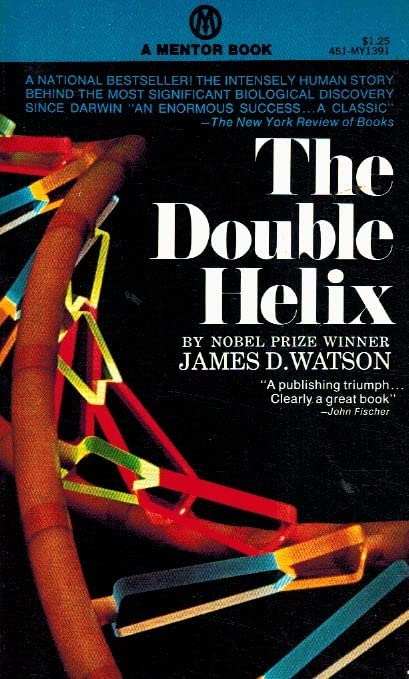
The three-dimensional structure of DNA, the molecule that carries the secret of life. The Double Helix: A Personal Account of the Discovery of the Structure of DNA was published in 1968 by Atheneum in the US and Weidenfeld and Nicolson in the UK.


It's a compact 226-page memoir that reads more like a novel than a textbook. On Goodreads, it sits at a solid 3.83 average from thousands of readers, lower than some classics only because of the controversy it sparked. Critics hailed it as astonishingly personal, unputdownable, and a classic of science writing, landing it on lists like the Guardian's 100 Best Nonfiction books.
But it also drew sharp criticism for its candid, some say dismissive portrayals of colleagues, especially Rosalind Franklin. Still, it remains one of the most influential and honest accounts of how science actually gets done. Here's the big picture, completely spoiler free, because the joy is in the journey.


Watson arrives in Cambridge full of ambition, but short on formal training in chemistry and crystallography. He quickly meets Francis Crick, and the two form an unlikely but electric partnership. Watson, the intuitive biologist, Crick the theoretical physicist who never stops talking.
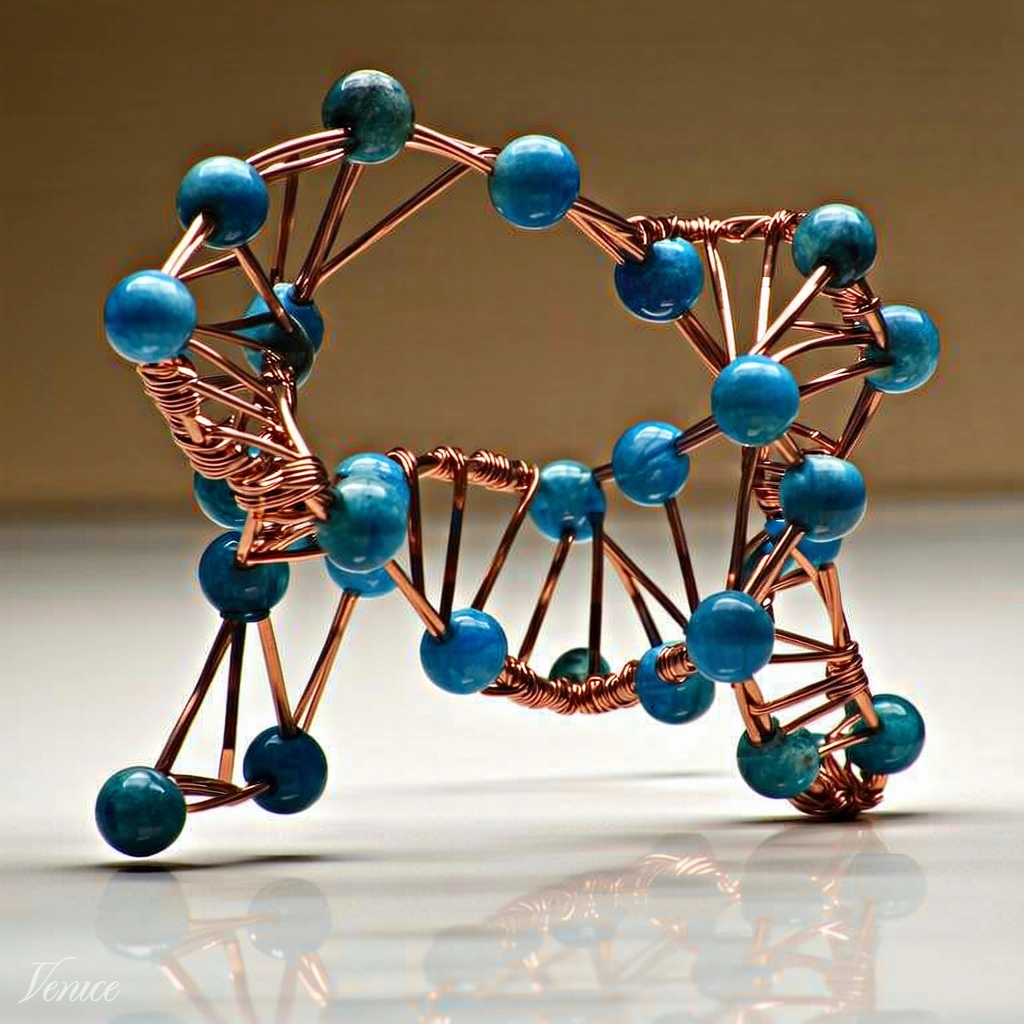
The book follows their daily lives in the early 1950s: lunches at the Eagle pub, endless model building with tin and wire, late-night arguments, and the constant pressure of a global scientific race. They're up against heavyweights: the legendary Linus Pauling at Caltech, who's already solved the structure of proteins and is now gunning for DNA, and the team at King's College London.


Watson pulls no punches describing the rivalries, the false starts, the bureaucratic hurdles, the cultural clashes between American brashness and British reserve, and the sheer intellectual thrill of chasing an idea that could explain how life replicates itself.
Here are the six biggest ones that make this book timeless. First, science is profoundly human. Second, the right collaboration can change everything. Third, bold model building and intuition matter. Fourth, competition sharpens the mind. Fifth, data from unexpected places can unlock everything. And sixth, real discovery is messy and exhilarating.


Watson's central goal was simple: to show the world that science isn't the polished, impersonal story we usually read in textbooks. It's a living breathing adventure full of doubt, excitement, and very real people.
Why does this book deserve your time right now? Because it demolishes the myth of the lone genius in a white coat and replaces it with something far more inspiring: a vivid, honest portrait of how breakthroughs actually happen. Watson's raw account reminds us that persistence, luck, collaboration, and even a little cheekiness can lead to world-changing ideas.


It's short, fast-paced, and often laugh-out-loud funny, yet it leaves you with a profound respect for the scientific process. Some details have been debated since publication, and modern accounts give more credit to everyone involved, but that honesty about the human side is exactly why it still feels fresh and empowering more than 50 years later.
There you have it: The Double Helix. The book that proves the greatest scientific adventures are the ones lived by real, imperfect, passionate people. Grab a copy today. It might just spark your own beginning of something big. I'll see you in the next one. Stay curious. Keep questioning. And go chase your own Double Helix.